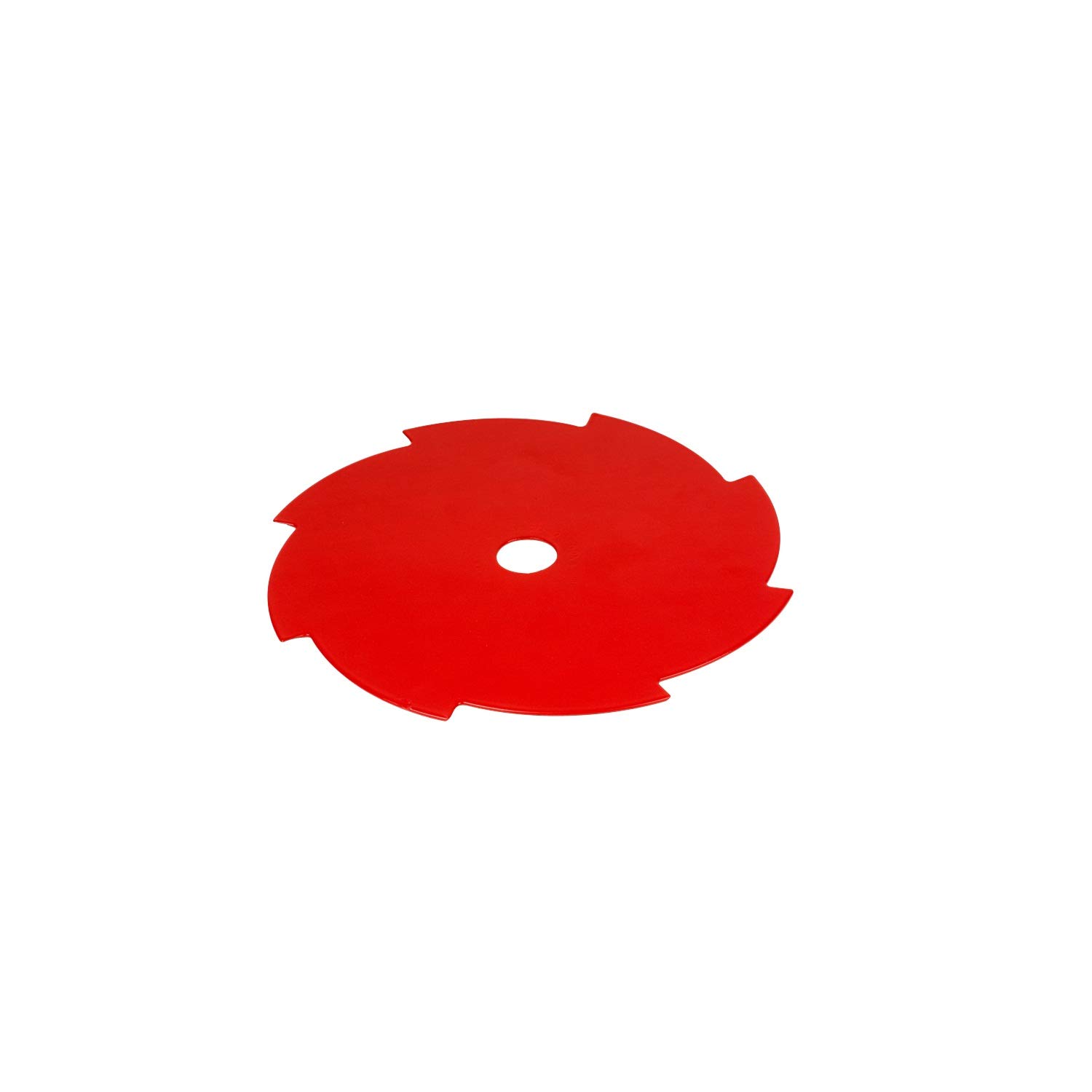
Oregon 8-Tooth Blade 255mm
A 255mm hardened-steel 8-tooth brush blade for petrol brush cutters, built to take on woody saplings and dense scrub that a 3-tooth blade struggles with.
You'll be sent to Amazon in your country. Indicative price — live, localised pricing where available. As an Amazon Associate we earn from qualifying purchases.
Pros
- Handles woody saplings, brambles and dense scrub a 3-tooth blade would bounce off
- More teeth give a smoother, less jarring cut than a 3-tooth blade at the same diameter
- 255mm diameter covers a decent swath per pass on rough ground
- Fits most brush cutters via the standard 25.4mm bore and reducer rings
Cons
- Slower through thick grass than a dedicated 3-tooth or 2-tooth blade
- Not a substitute for a saw blade on stems thicker than a couple of centimetres
- Small teeth chip or dull quickly if they clip stones, wire or soil
What it does
The Oregon 8-Tooth Blade sits between a grass blade and a saw blade in the brush cutter world. Where a 3-tooth blade is built for speed through soft growth, the eight smaller teeth on this one are shaped to bite into tougher, woodier material — brambles, blackthorn, thin saplings and matted scrub that would flex or deflect a coarser blade. At 255mm across it gives a reasonably wide cutting circle, so it clears ground efficiently even though it’s working harder material than a simple grass blade. It’s the blade to reach for once a patch has gone from overgrown to properly neglected, with woody stems mixed into the grass and weeds.
What to fit it to
This is a bolt-on metal blade, so it only suits brush cutters built to take metal attachments — typically petrol machines with a rigid straight shaft and a guard rated for blades rather than line only. Before buying, check the bore size (this blade uses the common 25.4mm standard, and most machines already carry the right reducer ring or have one supplied) and confirm your machine’s fixing nut and drive washer match the standard bolt pattern. If your current setup already runs a 230mm or 255mm blade of any tooth count, this one should fit the same way, but always check bore and fixing before assuming compatibility — sellers don’t always list it clearly.
Honest limitations
An 8-tooth blade is a middle ground, not a chainsaw substitute. It will chew through brambles and saplings up to roughly finger thickness, but push it into anything approaching wrist-thick woody growth and it will struggle, stall the engine, or damage the teeth rather than cut cleanly. It’s also noticeably slower cutting plain grass than a 3-tooth blade, since the smaller teeth are optimised for tougher material rather than raw speed. Like any hardened-steel blade, a strike on a buried stone, fence wire or the soil itself will chip or roll a tooth, and there’s no easy field fix — it’s a case of swapping the blade or having it professionally resharpened. Debris is thrown further and faster than with a line head, so proper eye and leg protection are essential.