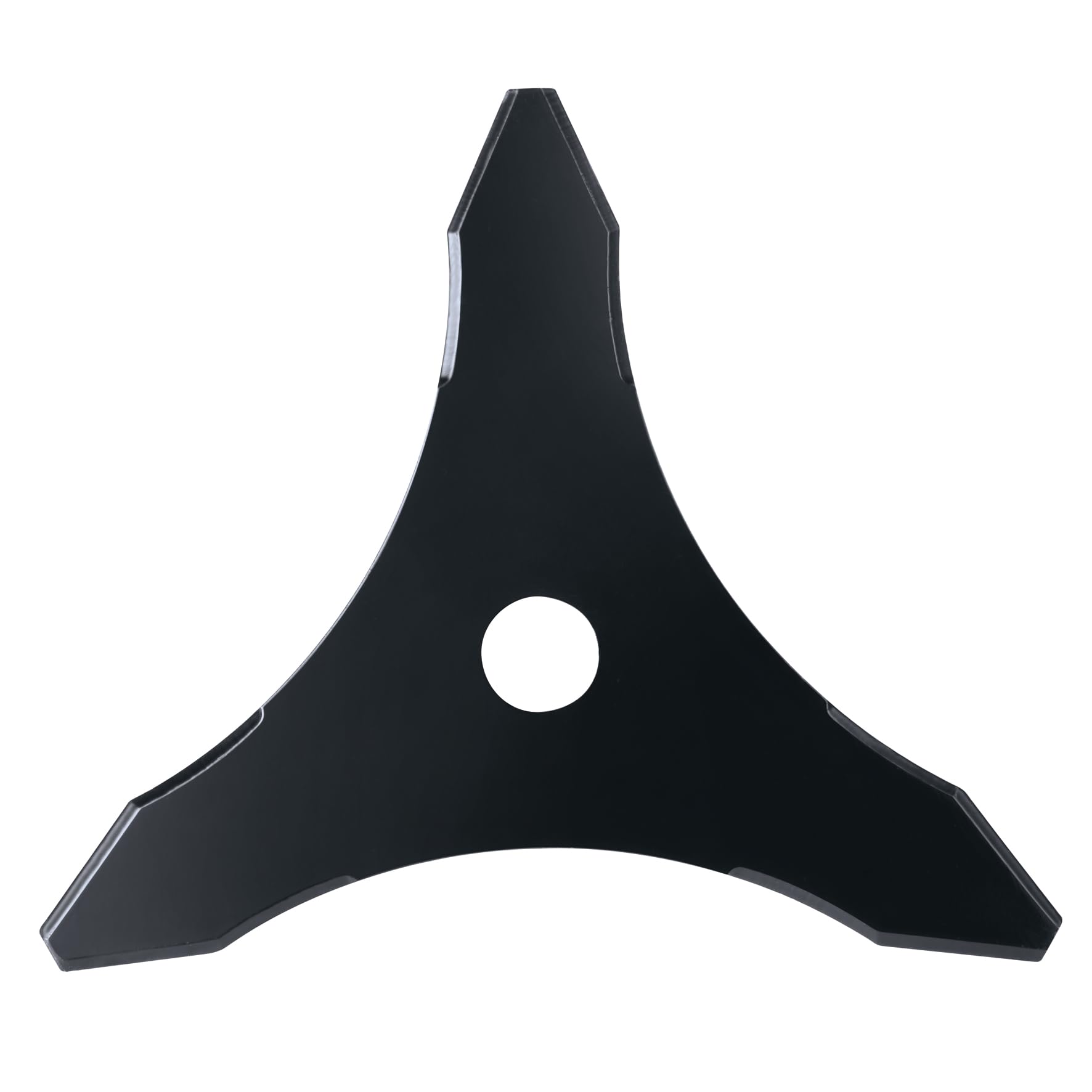
Einhell 3-Tooth Blade 255mm
A budget-friendly 3-tooth steel brush blade for Einhell trimmers, built for clearing grass, weeds and light bramble.
You'll be sent to Amazon in your country. Indicative price — live, localised pricing where available. As an Amazon Associate we earn from qualifying purchases.
Pros
- Genuine Einhell fitment for their petrol and cordless brush cutters
- Copes with tall grass, weeds and light woody growth that line can't touch
- Re-sharpenable, so it lasts longer than a set of trimmer line
Cons
- Not designed for thick woody stems or saplings — that needs a dedicated saw blade
- Steel edge dulls faster than premium tungsten-coated blades
What it does
A 3-tooth blade like this replaces the trimmer’s usual nylon line with three solid steel cutting edges. That trade-off buys you serious cutting power: tall, tangled grass, dense weeds, nettles and thin bramble get sliced through in one pass rather than whipped and shredded the way line does. It’s the natural upgrade once a patch of ground gets too rough or overgrown for a standard line head to handle comfortably.
At 255 mm across, this is a common size for domestic and semi-professional trimmers, and the 25.4 mm bore matches the standard mounting hole used across most brands — not just Einhell. It’s held on with the usual blade nut and retaining washer that come with the trimmer’s cutting-head hardware.
Choosing and fitting
Before buying, check two things on your own machine: the shaft type (straight-shaft trimmers generally accept metal blades; many curved-shaft strimmers are line-only for safety reasons) and the maximum blade diameter stated in the trimmer’s manual. Fitting an oversized blade puts extra strain on the gearbox and clutch. If your Einhell model’s manual lists a 255 mm 3-tooth blade as compatible, this is a straightforward drop-in replacement or spare.
A 3-tooth design sits in the middle of the blade range: it’s more aggressive than a line head but less aggressive than an 8-tooth or 40-tooth blade, which are built for denser scrub. That makes it a sensible general-purpose choice for grass, weeds and light brush without overkill.
Honest limitations
This is a functional steel blade, not a premium one. It will need sharpening or replacing sooner than a hardened or carbide-tipped alternative if used regularly on tough vegetation. It’s also not the right tool for saplings, woody shrubs or anything with a stem thicker than a finger — pushing a 3-tooth blade into that kind of material risks kickback and won’t cut cleanly anyway. For that job, step up to a dedicated brush saw blade. Treat this as a solid, affordable workhorse for grass and light clearance rather than a do-everything blade.