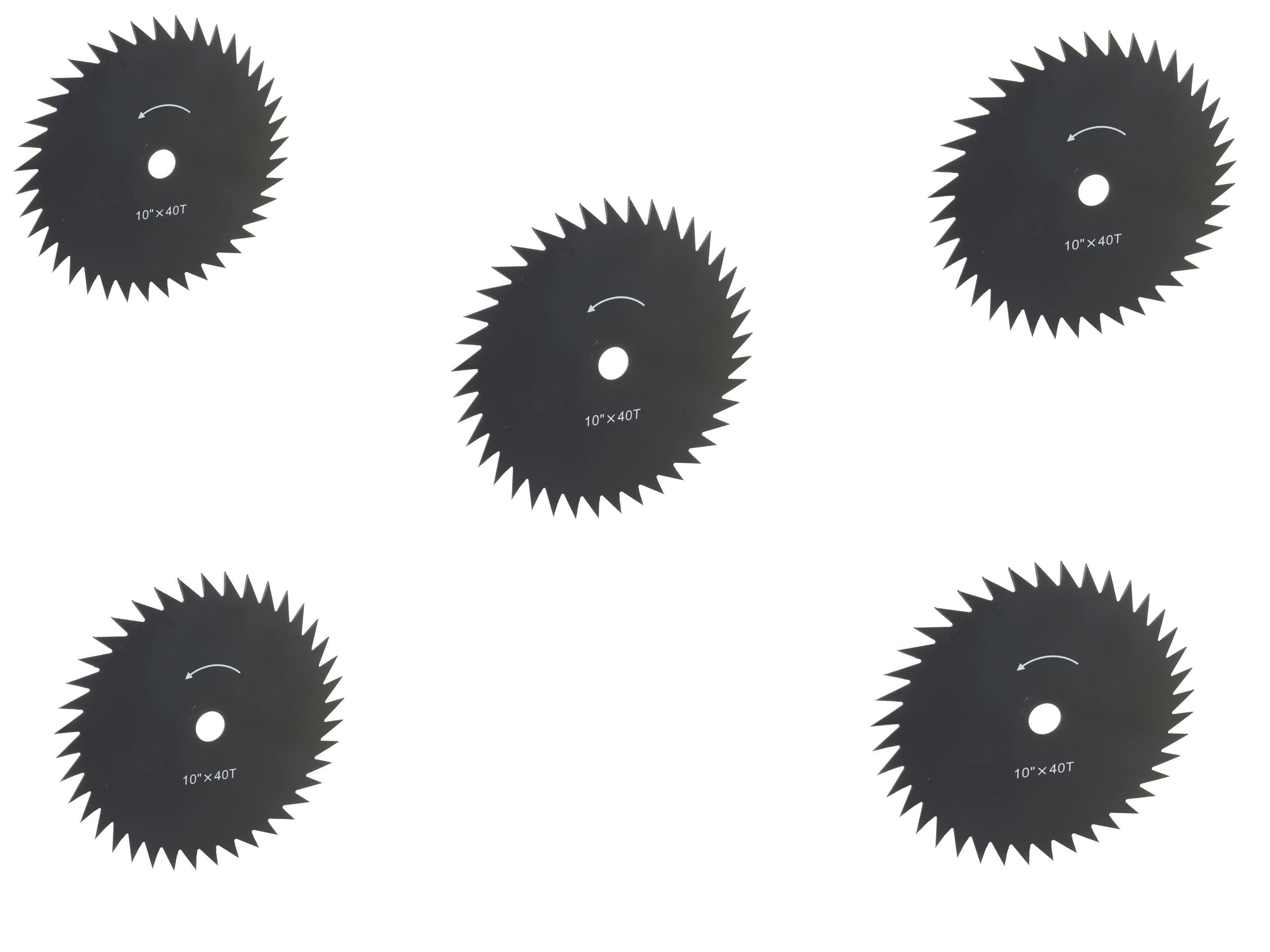
Secura 40-Tooth Clearing Blade 255mm
A 40-tooth carbide-tipped clearing blade for cutting saplings and light woody growth, sized to fit most 255mm-bore brush cutters.
You'll be sent to Amazon in your country. Indicative price — live, localised pricing where available. As an Amazon Associate we earn from qualifying purchases.
Pros
- Cuts small saplings and woody brush that a 3-tooth blade struggles with
- Fine 40-tooth pattern gives a cleaner cut with less kickback than coarse saw blades
- 255 mm diameter fits the bore size used by most petrol brush cutters
Cons
- Not designed for thick trunks or dense hardwood — a proper chainsaw is the safer tool for that
- Fine teeth clog faster in wet grass or mud than a simple brush blade
- Only as good as its edge — needs occasional sharpening or teeth can chip on stones
What this blade is for
A 40-tooth clearing blade sits between a simple 3-tooth brush blade and a full-on chainsaw attachment. The extra teeth mean each one takes a smaller bite, which lets the blade slice through woody stems and saplings rather than just hacking at them. This makes it the right choice once your land moves from “thick grass and brambles” to “young trees and scrubby regrowth” — the kind of growth that bends a 3-tooth blade instead of cutting it cleanly.
At 255 mm diameter with a standard 25.4 mm bore, it matches the size most petrol brush cutters are built around, and reducer rings are commonly included to step down to smaller shaft fittings if needed. As with any blade attachment, always check your machine’s manual for the maximum blade diameter it’s rated for before fitting one — going oversized changes the tip speed and balance of the head.
Choosing and using it well
This blade suits clearing overgrown boundaries, cutting back bramble stands with woody cores, or tackling saplings and suckers up to a few centimetres thick. It is not a substitute for a chainsaw on anything larger — pushing a clearing blade into a trunk it can’t handle is how blades bind, kick back, or shatter a tooth.
Keep the cutting edge away from soil and stones; carbide-style teeth are harder than plain steel but still chip on grit. A fine-tooth blade also loads up faster in wet or muddy vegetation than an open 3-tooth blade, so expect to clear debris from the teeth more often on damp days. Full-face visors and sturdy boots are a sensible minimum when running any saw-type blade, since the failure mode of a chipped or snagged tooth is more violent than with a simple brush blade.