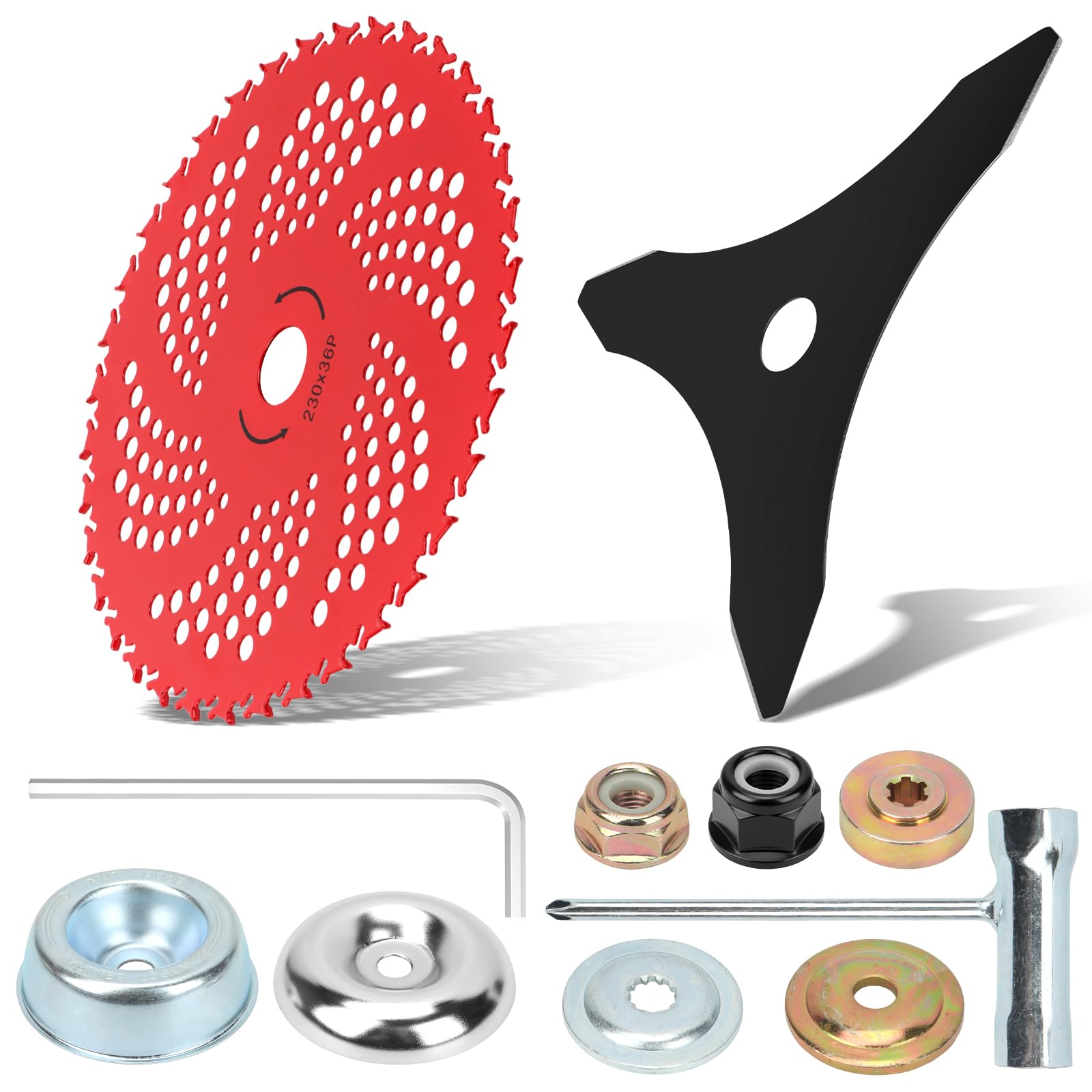
36-Tooth Carbide Blade 230mm
A 36-tooth carbide-tipped brush cutter blade built for cutting scrub, thin saplings and dense brush cleanly and fast.
You'll be sent to Amazon in your country. Indicative price — live, localised pricing where available. As an Amazon Associate we earn from qualifying purchases.
Pros
- Carbide tips stay sharp far longer than plain steel
- High tooth count gives a cleaner, less jarring cut
- Handles scrub and thin saplings that a 3-tooth blade struggles with
Cons
- Carbide tips can chip on stones or wire, unlike softer steel that just dulls
- Sharpening needs a diamond file or a professional service, not a standard file
What it does
A carbide-tipped blade swaps the plain hardened-steel edge of a basic brush blade for small tungsten carbide inserts brazed onto each tooth. With 36 teeth packed around a 230 mm disc, it behaves more like a fine-toothed circular saw blade than a chopping tool: it slices through stems rather than smashing through them, which means less kickback and a tidier cut in mixed scrub, brambles and woody growth up to finger thickness. Carbide holds an edge for many seasons of normal use, so it suits anyone clearing the same overgrown patch, hedge base or field margin year after year and who is tired of resharpening or replacing a steel blade every few outings.
Fitting and choosing
Like most aftermarket blades, this one is sold as a universal fit built around a 25.4 mm bore, with reducer rings usually supplied to step down to smaller mounting holes found on some machines. Check your brush cutter’s blade adaptor and mounting bolt before ordering, since the hole pattern and reducer size still need to match your specific machine — a universal blade fits many brush cutters, not every one. It needs a machine solid enough to spin a 230 mm disc safely; very light electric trimmers are often rated for smaller diameters, so confirm the maximum blade size in your manual first.
Limitations
Carbide teeth are harder but more brittle than plain steel. A steel 3-tooth blade that clips a hidden stone usually just goes dull; this blade’s carbide tips can chip or crack on the same impact, and a chipped tooth is not something you can easily file back into shape. It is also not a substitute for a proper forestry or saw blade on thick woody stems — treat it as an upgrade for scrub and light brush, not for felling saplings of real diameter. Sharpening requires a diamond hone or a blade-sharpening service rather than the flat file that works on softer steel blades.