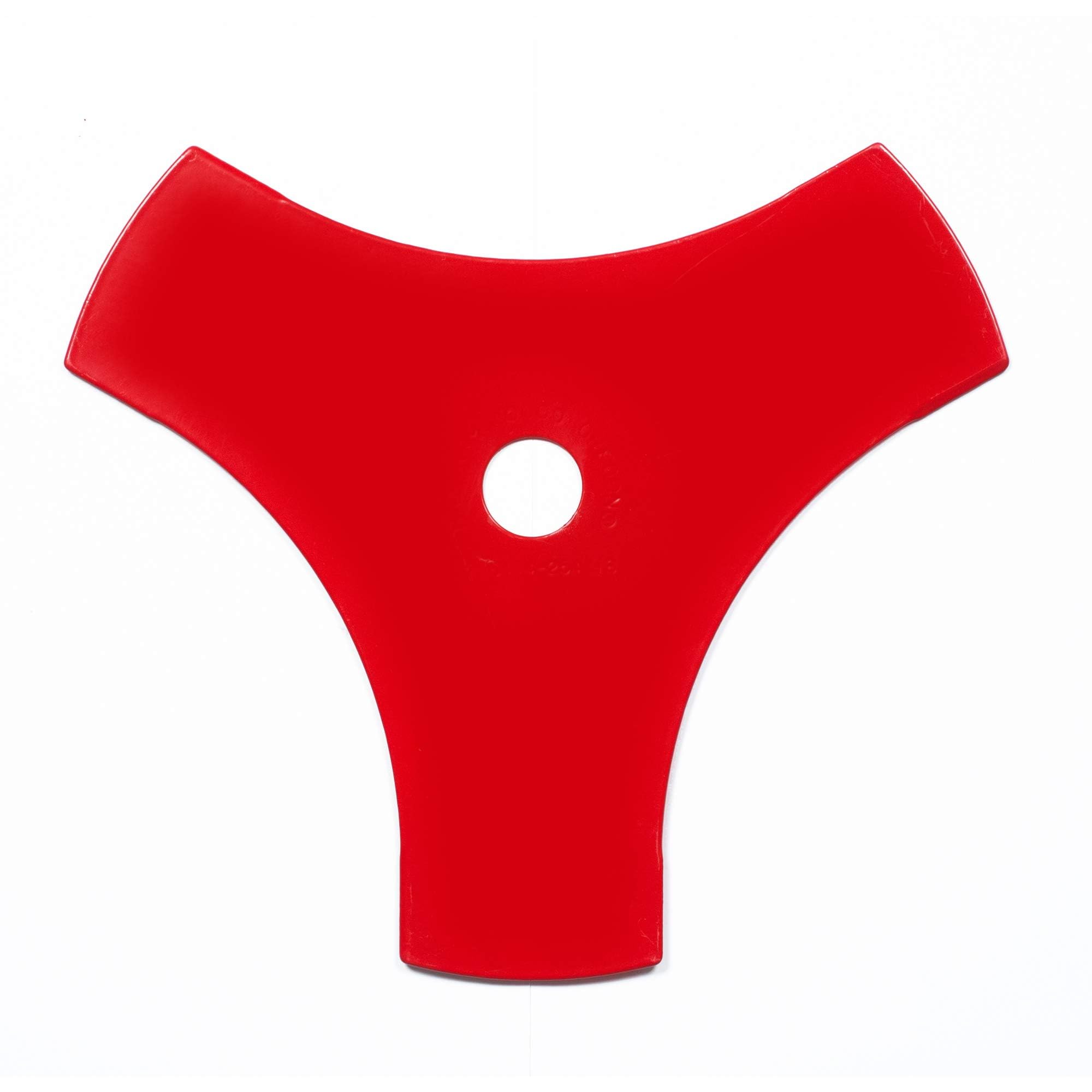
Oregon 3-Tooth Blade 255mm
A 255mm hardened-steel 3-tooth brush blade for petrol and high-power cordless brush cutters tackling grass, weeds and light brush.
You'll be sent to Amazon in your country. Indicative price — live, localised pricing where available. As an Amazon Associate we earn from qualifying purchases.
Pros
- Cuts through tough grass, weeds and light brush that would clog a line head
- 255mm diameter gives a wider swath per pass than smaller 230mm blades
- Hardened steel holds an edge reasonably well in normal use
- Fits most brush cutters via the standard 25.4mm bore and reducer rings
Cons
- Not designed for woody saplings or stems over pencil thickness
- Edge dulls fast if it clips stones, fence wire or soil
What it does
The Oregon 3-Tooth Blade is a steel brush blade built for machines that need more bite than a nylon line head can give. The three curved teeth slice through tall grass, dense weeds and light brush in a single pass, and at 255mm across it covers a slightly wider cutting circle than the more common 230mm blades, which means fewer passes over a given patch of ground. It’s a step up from line trimming, not a replacement for a saw blade — think overgrown verges, allotments and rough paddock edges rather than anything with real wood in it.
What to fit it to
This is a bolt-on blade, not a line head, so it only works on brush cutters designed to take metal cutting attachments (most petrol models and the higher-power cordless machines with a rigid straight shaft). Check two things before buying: the arbor/bore size, which on this blade is the widely used 25.4mm standard (most machines will already have the right reducer ring, or one is often supplied), and that your machine’s guard and gearbox are rated for metal blades rather than line only — cheaper or lower-powered cordless trimmers sometimes aren’t. If your current blade is a 230mm 3-tooth and fits fine, a 255mm version should bolt straight on using the same fixing, but always match the bore and fixing nut/bolt pattern rather than assuming.
Honest limitations
A 3-tooth blade like this is a generalist, not a wood-cutter. It handles grass, nettles, brambles and thin whippy growth well, but it will bounce off or bend on stems thicker than a finger — for saplings or woody scrub you want an 8-tooth or dedicated saw blade instead. The hardened steel keeps a usable edge through normal grass and weed cutting, but a single strike on a buried stone, a fence post or wire will roll or chip a tooth, and there’s no getting that edge back with a quick file — it’s a case of swapping or professionally resharpening it. It also spins faster and throws more debris than a line head, so eye and leg protection matter more once you fit it.