The best electric (corded) brush cutters for 2026
The most cost-effective option for small plots near a socket — no runtime limit, no battery to buy, unbeatable price. Below are the corded machines we recommend, from edging trimmers to blade-equipped models, followed by a complete buying guide.

BOSCH · Corded 1000W · Blade
Bosch AFS 23-37
A true corded electric brush cutter with a metal blade included. Solid power for a small, tough plot near a socket.
Read the review
BLACK & DECKER · Corded 550W · 3-in-1
BLACK+DECKER BESTA530CM
A clever 3-in-1 corded tool — grass trimmer, edger and mini push-mower in one — for tidy, constant-power lawn care near a socket.
Read the review
BLACK & DECKER · Corded 900W
BLACK+DECKER GL9035
A 900W corded grass trimmer with a 180° pivoting head for effortless edging — the pick for a small-to-medium lawn near a socket.
Read the review
AL-KO · Corded 1200W · Blade
AL-KO BC 1200 E
A powerful corded alternative with a 4-tooth blade and line head. Good value if the cable does not bother you.
Read the review
MAKITA · Corded 1000W
Makita UR3501
A straightforward 1000W corded brush cutter with real blade capability, best suited to medium gardens near a power socket rather than roaming plots.
Read the review
BOSCH · Corded 350W
Bosch ART 30 Combitrim
The reference corded grass trimmer for very small plots. Light, simple, great for edging and finishing only.
Read the review
BLACK & DECKER · Corded 300W
BLACK+DECKER GL310
A featherweight 1.55 kg corded grass trimmer for very small gardens — the cheapest, simplest way to keep lawn edges tidy near a socket.
Read the review
BLACK & DECKER · Corded 350W
BLACK+DECKER GL360
An ultra-light 1.55 kg corded grass trimmer — the cheapest, simplest way to keep a very small lawn's edges tidy.
Read the review
BOSCH · Corded 280W
Bosch EasyGrassCut 23
A budget 280W corded trimmer with a 23cm cut and semi-automatic line feed — the cheapest sensible way to keep a small lawn's edges tidy.
Read the review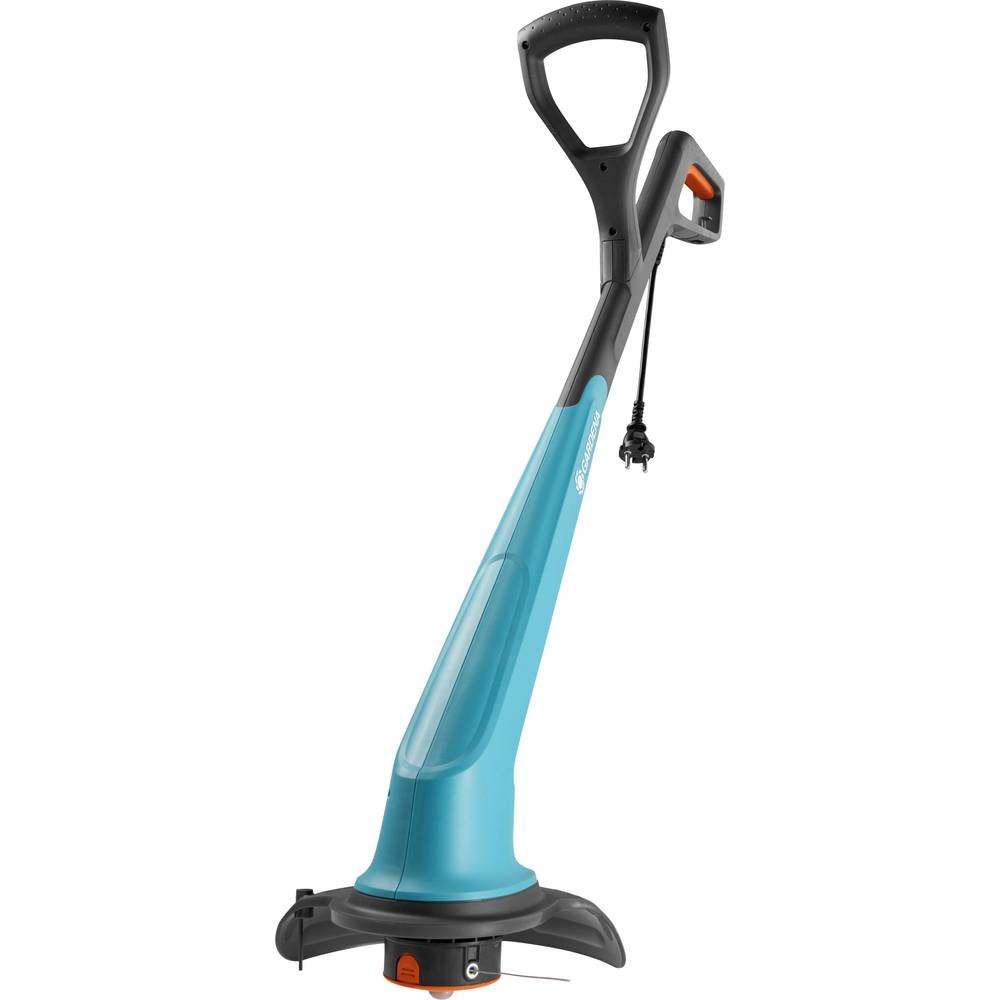
GARDENA · Corded 300W
Gardena SmallCut 300
A tiny, light 300W corded trimmer for pocket-sized lawns and edges — cheerful and easy, but tethered to a cable and strictly line-only.
Read the reviewWhen a corded electric brush cutter makes sense
A corded electric brush cutter is the budget hero for one specific situation: a small plot within reach of a power socket. There's no battery to buy or charge, no fuel to mix, unlimited runtime, and the price is unbeatable. For a courtyard, a small garden, or edging and finishing work, it's often all you need.
The trade-off is the cable. It limits your range and is a genuine nuisance on larger or obstacle-heavy plots. Beyond a socket's reach, a cordless machine is the better tool.
Wattage: string trimmer vs real brush cutter
Power is measured in watts, and it draws a clear line:
- 250–500 W — a grass trimmer. Fine for edging and light lawn tidy-up only.
- 700–1000 W — a capable electric brush cutter that can drive a metal blade through tougher growth.
- 1000 W and up — the powerful end, like the AL-KO BC 1200 E, for a small but demanding plot.
If you only ever tidy grass edges, a low-wattage trimmer is enough. If you hit nettles, tall grass or woody stems, choose 700 W+ with blade capability.
Line head or metal blade?
The cheapest corded machines take a nylon line only — strictly grass. A true electric brush cutter, like the Bosch AFS 23-37, includes a metal blade that cuts far tougher growth. If the words "brush cutter" matter to you, make sure a blade is included or supported.
Managing the cable safely
Always use an RCD-protected outdoor extension lead rated for the tool's power, keep the cable behind you and over your shoulder, and never cut toward the lead. A cable clip or the tool's built-in cable retention stops accidental unplugging mid-cut.
Frequently asked questions
What is the difference between an electric brush cutter and a string trimmer?
A string trimmer (low wattage, line only) is for grass and edging. An electric brush cutter has more power (700 W+) and accepts a metal blade, so it can cut nettles, tall grass and light woody growth.
Are corded electric brush cutters any good?
For small plots near a socket, they are excellent value — unlimited runtime, no battery cost, low price. The only real limitation is the cable, which restricts range and is awkward on larger or cluttered plots.
How much power do I need?
For edging and light grass, 250–500 W is enough. For a genuine brush cutter that can drive a blade, choose 700–1000 W or more.
Can I use an electric brush cutter in the rain?
No. Electric tools should never be used in wet conditions — it is a serious shock hazard. Always use an RCD-protected socket or extension lead as an added safeguard.
Electric or cordless for a small garden?
If everything is within a cable’s reach of a socket and you want the lowest price, go corded electric. If you want freedom to roam without a cable, a cordless machine is worth the extra cost.
The tool we recommend
Found your model? Buy it at the right price.
UniverTrack tracks the real price of your brush cutter across retailers, spots fake discounts and tells you when it's genuinely the right moment to buy — with an AI assistant to guide you.
- Real price history
- Buy-now alerts
- AI buying assistant
No commitment · Cancel in 1 click · 5 languages