The best brush cutters for scrubland
Scrubland mixes tough grass, gorse, brambles and woody stems that line can't touch. You need torque and a metal blade. These are the machines we'd use to clear it.
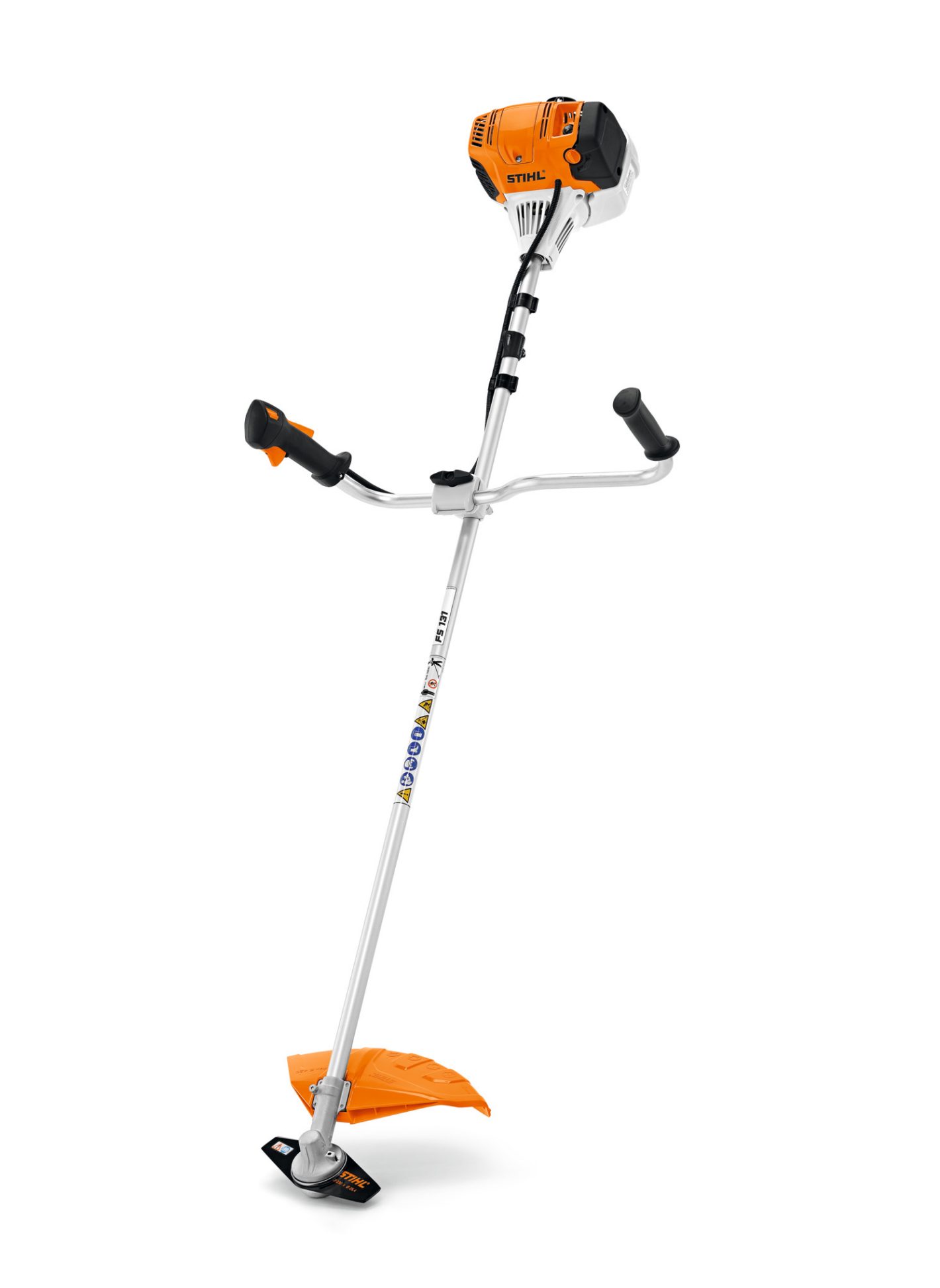
In short:Scrubland needs a metal blade, a bike handle and a harness. The Stihl FS 131 (1.4 kW 4-MIX, 5.8 kg) and Makita EM4351UH (43 cc, 1.5 kW, very low vibration) suit regular clearing; the Stiga BC 545 B (1.25 kW, 3T blade, double harness) comes ready; the 52 cc Einhell GC-BC 52 (1.5 kW) and Fuxtec FX-MS152 (2.95 hp) are budget workhorses; and the twin-18V Makita DUR369AZ (255 mm blade) is the quiet option for lighter scrub. Gorse and woody stems need a saw blade where the manual allows.
Our picks, ranked
- 1
- 2
- 3
- 4
- 5
- 6


Tough, mixed and woody
Scrubland mixes coarse grass, gorse, bramble and young woody stems, often on rough ground with hidden stones. It’s long, physical work, so you need torque, a metal blade, a bike handle and a harness.
Our picks
- Stihl FS 131 — semi-pro 36.3 cc 4-MIX, 1.4 kW; 5.8 kg without guard or tool.
- Stiga BC 545 B — 42.7 cc, 1.25 kW, 45 cm cut, 3T blade and double harness.
- Makita EM4351UH — 43 cc MM4, 1.5 kW, universal guard and 2.1–2.2 m/s² vibration.
- Einhell GC-BC 52 — 51.7 cc, 1.5 kW, 25.5 cm 3-tooth blade, split shaft; 8.5 kg.
- Fuxtec FX-MS152 — 52 cc, 2.95 hp, metal brush blade and padded strap.
- Makita DUR369AZ — twin-18V brushless, 255 mm blade, 430 mm line; for lighter scrub near homes.
Clearing gorse
Gorse is dense and prickly. Cut it in sections from the outside, taking the top growth first, and wear thick gloves and a visor. Gorse is often important for nesting birds — avoid the nesting season and leave some stands. Heavy, old gorse may need a saw blade or a clearing saw.
Safety
Wear a forestry helmet with visor and ear defenders, cut-resistant trousers and boots, and keep people at least 15 m away. Walk the ground first for stones and wire. See safety gear, brambles and dense undergrowth.
Our picks at a glance
| Model | Type | Engine / power | Weight | Rating |
|---|---|---|---|---|
| Stihl FS 131 | Petrol | 36.3 cc · 4-MIX | 5.8 kg (without guard and cutting tool) | 8.7 / 10 |
| Stiga BC 545 B | Petrol | 42.7 cc · 2-stroke | — | 8 / 10 |
| Makita EM4351UH | Petrol | 43 cc · 4-stroke MM4 | 8.5–8.6 kg (retailers) | 8.4 / 10 |
| Einhell GC-BC 52 I AS | Petrol | 51.7 cc · 2-stroke | 8.5 kg (listing) | 7.8 / 10 |
| Fuxtec FX-MS152 | Petrol | 52 cc · 2-stroke | — | 8 / 10 |
| Makita DUR369AZ | Cordless | 36V LXT · Brushless | 5.9–6.3 kg (retailers) | 8.6 / 10 |
Weights are as stated by the maker, UK retailers or Amazon, so some include a battery or cutting gear and others don't — see each review for details.
Compare our picks head to head
Frequently asked questions
Do I need a metal blade for scrubland?
Yes. Gorse, brambles and young woody stems shred line. Fit a 3- or 4-tooth blade for brambles and mixed scrub, and a saw blade for woody stems, as your manual allows.
Is a 25–30 cc machine enough?
For light scrub cut regularly, perhaps. For thick gorse and established woody growth, choose about 1.2 kW or more — the Stiga BC 545 B, Stihl FS 131 or a 52 cc machine.
2-stroke or 4-stroke for scrub?
Either, with the right blade. Four-strokes like the Makita EM4351UH avoid fuel mixing; the 4-MIX Stihl FS 131 is the lightest for its power.