The best brush cutters for overgrown, neglected land
Reclaiming neglected land means mixed growth — tall grass, brambles, saplings and everything between. You need power, a blade and a harness. These are built for it.
In short:Overgrown land needs high power, a metal blade and a harness. The Stihl FS 131 (1.4 kW 4-MIX, 5.8 kg) is the most capable for its weight; the Stiga BC 545 B (1.25 kW, 45 cm, 3T blade, double harness) and Honda UMK 435 (1.0 kW GX35, double harness) come ready to clear; and the 52 cc Fuxtec FX-MS152 (2.95 hp) and Einhell GC-BC 52 (1.5 kW, 25.5 cm blade) give the most power for the money. For a quieter staged approach, the twin-18V Makita DUR369AZ comes with a 255 mm blade.
Our picks, ranked
- 1
- 2
- 3
- 4
- 5
- 6


Reclaiming wild ground
Neglected land throws everything at you at once — matted grass, brambles, nettles and young saplings, often hiding stones, wire and rubbish. That calls for high torque, a metal blade, a bike handle and a harness, which is firmly petrol territory for anything but a small patch.
Our picks
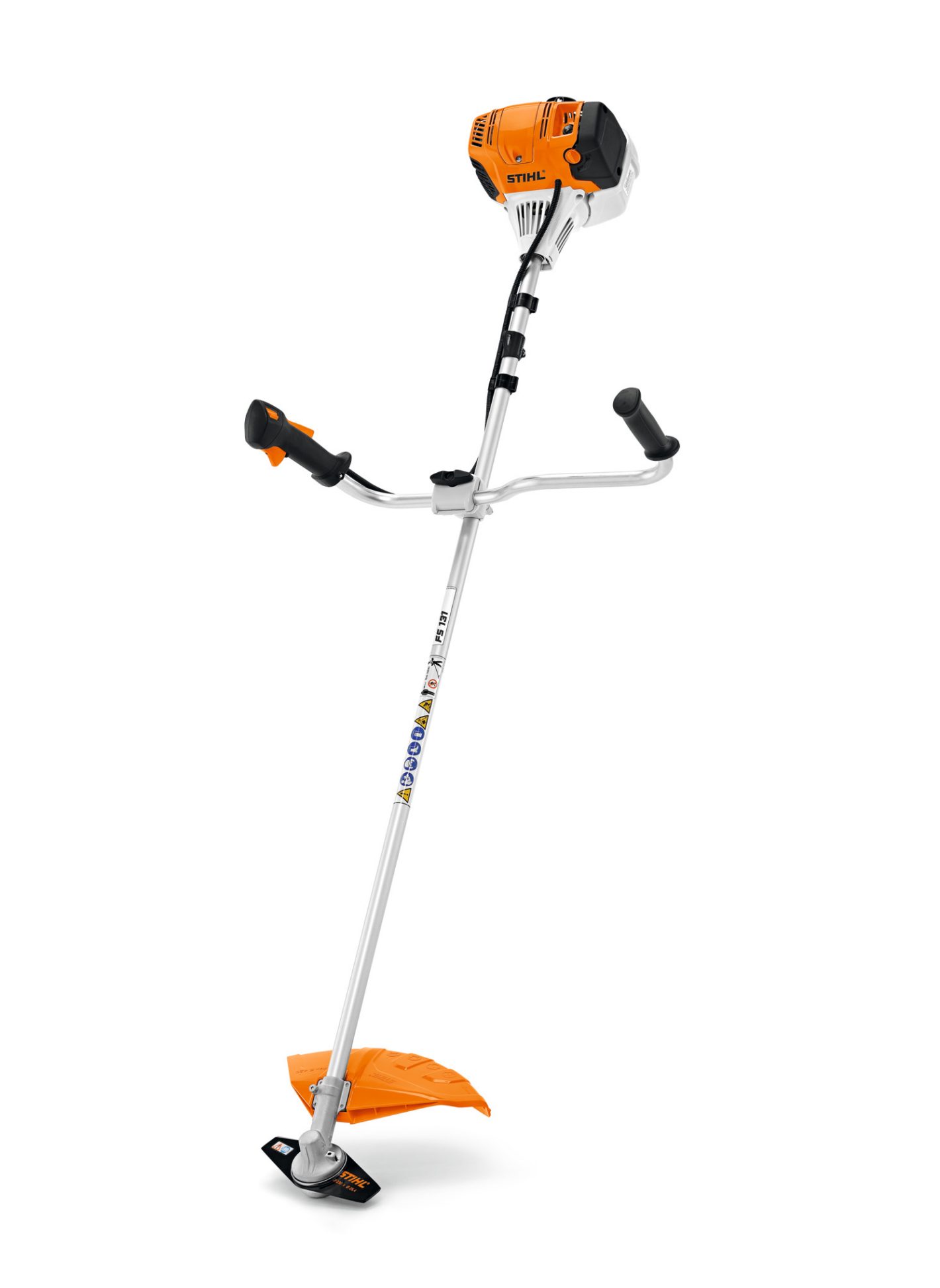
- Stihl FS 131 — semi-pro 36.3 cc 4-MIX, 1.4 kW, 5.8 kg without guard or tool; strong low-speed torque for blades.
- Stiga BC 545 B — 42.7 cc, 1.25 kW, 45 cm cut, with a 3T blade, Tap&Go head and double harness in the box.
- Fuxtec FX-MS152 — 52 cc, 2.95 hp, metal brush blade and line head; the most quoted power per pound.
- Einhell GC-BC 52 — 51.7 cc, 1.5 kW, 25.5 cm 3-tooth blade, automatic choke and split shaft; 8.5 kg.
- Honda UMK 435 UE — GX35 four-stroke on unmixed petrol, bike handle and double harness.
- Makita DUR369AZ — twin-18V brushless, 430 mm line, 255 mm blade; quiet, for smaller wild areas.
Work in stages
- Walk the plot first and remove wire, stones, bottles and anything that could be thrown or wrap the head.
- Take the height off with line on grass and nettles, working in strips.
- Switch to a blade for brambles and woody growth, cutting from the outside in and taking tall growth from the top down.
- Rake and clear as you go, so you can see the ground and the next obstacle.
Stay safe
Wear a forestry helmet with visor and ear defenders, gloves, cut-resistant trousers and boots, and keep everyone at least 15 m away. Use the harness and keep the blade below knee height. See safety gear for brush cutting and our buying guide.
Our picks at a glance
| Model | Type | Engine / power | Weight | Rating |
|---|---|---|---|---|
| Stihl FS 131 | Petrol | 36.3 cc · 4-MIX | 5.8 kg (without guard and cutting tool) | 8.7 / 10 |
| Stiga BC 545 B | Petrol | 42.7 cc · 2-stroke | — | 8 / 10 |
| Fuxtec FX-MS152 | Petrol | 52 cc · 2-stroke | — | 8 / 10 |
| Einhell GC-BC 52 I AS | Petrol | 51.7 cc · 2-stroke | 8.5 kg (listing) | 7.8 / 10 |
| Honda UMK 435 UE | Petrol | 35 cc · GX35 4-stroke | About 7.5 kg dry (retailers: 7.53–7.6 kg) | 8.6 / 10 |
| Makita DUR369AZ | Cordless | 36V LXT · Brushless | 5.9–6.3 kg (retailers) | 8.6 / 10 |
Weights are as stated by the maker, UK retailers or Amazon, so some include a battery or cutting gear and others don't — see each review for details.
Compare our picks head to head
Frequently asked questions
What brush cutter clears overgrown land fastest?
A powerful petrol machine with a metal blade and bike handle — the Stihl FS 131, Stiga BC 545 B or a 52 cc budget machine like the Fuxtec FX-MS152 or Einhell GC-BC 52.
Can I reclaim a wild plot with a battery machine?
On a small plot, yes, in stages: the Makita DUR369AZ with spare LXT batteries handles tall grass, scrub and light brambles. For a big, badly overgrown plot, petrol is faster.
What blade for saplings and woody stems?
A saw blade cuts saplings and thick woody stems; a 3- or 4-tooth blade handles brambles and mixed brush. Only fit blades your manual lists — see the best brush cutter blades.