The best brush cutters for Japanese knotweed
Knotweed grows in dense, hollow-caned thickets that punish weak engines, and every cutting counts as controlled waste. These picks are ranked by the torque and blade capacity needed to clear a stand properly.
- 1
- 2
- 3
- 4
- 5
- 6


What matters for Japanese knotweed
Knotweed canes are hollow but surprisingly tough, packed into dense stands that can stand well over head height by midsummer. Cutting through a thick, mature cane cleanly needs real torque at the blade — an underpowered machine will glance off the stem, judder, or stall rather than shear through it, and a nylon line head is essentially useless against woody growth. You’ll also want a proper 3-tooth or 4-tooth metal blade fitted before you start, since this is not a line job. Because a single stand can run to dozens of square metres and you’ll likely be cutting it back repeatedly through the growing season, engine reliability and wearing a harness comfortably both matter as much as raw power. One more thing that has nothing to do with the machine: every cane you cut is controlled waste, so plan for containment and disposal before you fire up the engine, not after.
Our picks
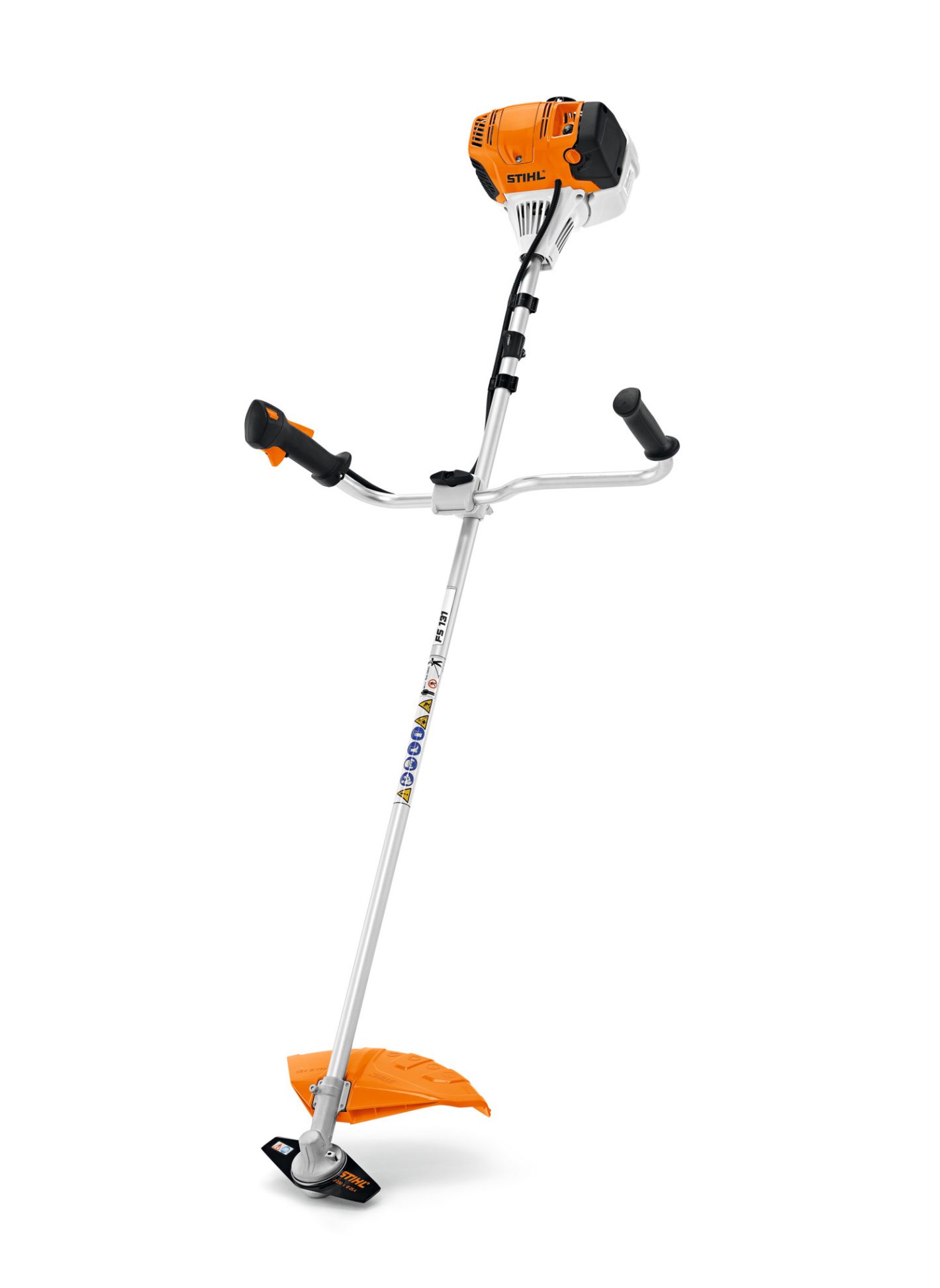
The Stihl FS 131 is our top pick for knotweed — its 36.3 cc 4-MIX engine has the low-end torque to drive a blade through a dense stand of mature canes without bogging down, and it’s built to keep doing this session after session on a genuinely bad infestation.
The Husqvarna 128R is the honest entry point: at 28 cc it will fit a blade and cope with a smaller, younger patch of knotweed, but a thick, established stand will ask more of it than it can comfortably give.
The Makita EM4351UH is a close rival to the Stihl: a 43 cc professional 4-stroke with exceptionally low vibration, so it shears through dense canes just as convincingly while being far kinder on your hands over a long clearing session.
The Einhell GC-BC 52 brings genuine 52 cc power at a budget price, with a metal blade included in the box — plenty of muscle for a large knotweed stand if you’re happy with a less refined machine.
The Honda UMK 425 is the odd one out here: its GX25 4-stroke is quiet, mix-free and famously reliable, but at 25 cc it’s really built for tidying young shoots and thin regrowth rather than felling thick, established canes.
The Fuxtec FX-MS152 matches the Einhell for value — another 52 cc engine with a 3-tooth steel blade included, giving strong cutting capacity for tackling a big, overgrown knotweed patch on a tight budget.
Which should you choose?
If you’re facing a genuinely dense, mature knotweed stand and want the machine that just gets through it, buy the Stihl FS 131 or Makita EM4351UH — both have the torque to drive a blade through thick canes without drama, with the Makita edging it on comfort for long, repeated sessions. If budget matters more than polish, the Einhell GC-BC 52 or Fuxtec FX-MS152 give you similar 52 cc cutting capability for a fraction of the price, just with a rougher finish and a basic harness. Reserve the Husqvarna 128R and Honda UMK 425 for smaller or younger patches — thinning new shoots or keeping a controlled stand in check — rather than felling a mature thicket from scratch. Whatever you buy, fit a metal blade first, and have a plan for bagging or containing the cuttings before you start: under UK rules, knotweed waste can’t just go in the green bin.
Frequently asked questions
What blade should I use on Japanese knotweed?
A 3-tooth or 4-tooth metal blade cuts mature canes cleanly; a nylon line head just bounces off the woody stems and wastes fuel. For very thick, old growth, an 8-tooth or circular-saw blade shears through in fewer passes.
Do I need to do anything special with the cuttings?
Yes. Japanese knotweed is controlled waste under UK environmental law — cut material and any contaminated soil must not go in your green bin or general waste. Let cuttings dry out on site or bag them for disposal via a licensed carrier or permitted site.
Will cutting knotweed with a brush cutter get rid of it?
No — cutting only removes the visible canes, not the rhizome network underground, and cut fragments can resprout if left in contact with soil. Regular cutting weakens a stand over a season or two, but a lasting solution needs herbicide treatment or professional excavation.
The tool we recommend
Found your model? Buy it at the right price.
UniverTrack tracks the real price of your brush cutter across retailers, spots fake discounts and tells you when it's genuinely the right moment to buy — with an AI assistant to guide you.
- Real price history
- Buy-now alerts
- AI buying assistant
No commitment · Cancel in 1 click · 5 languages