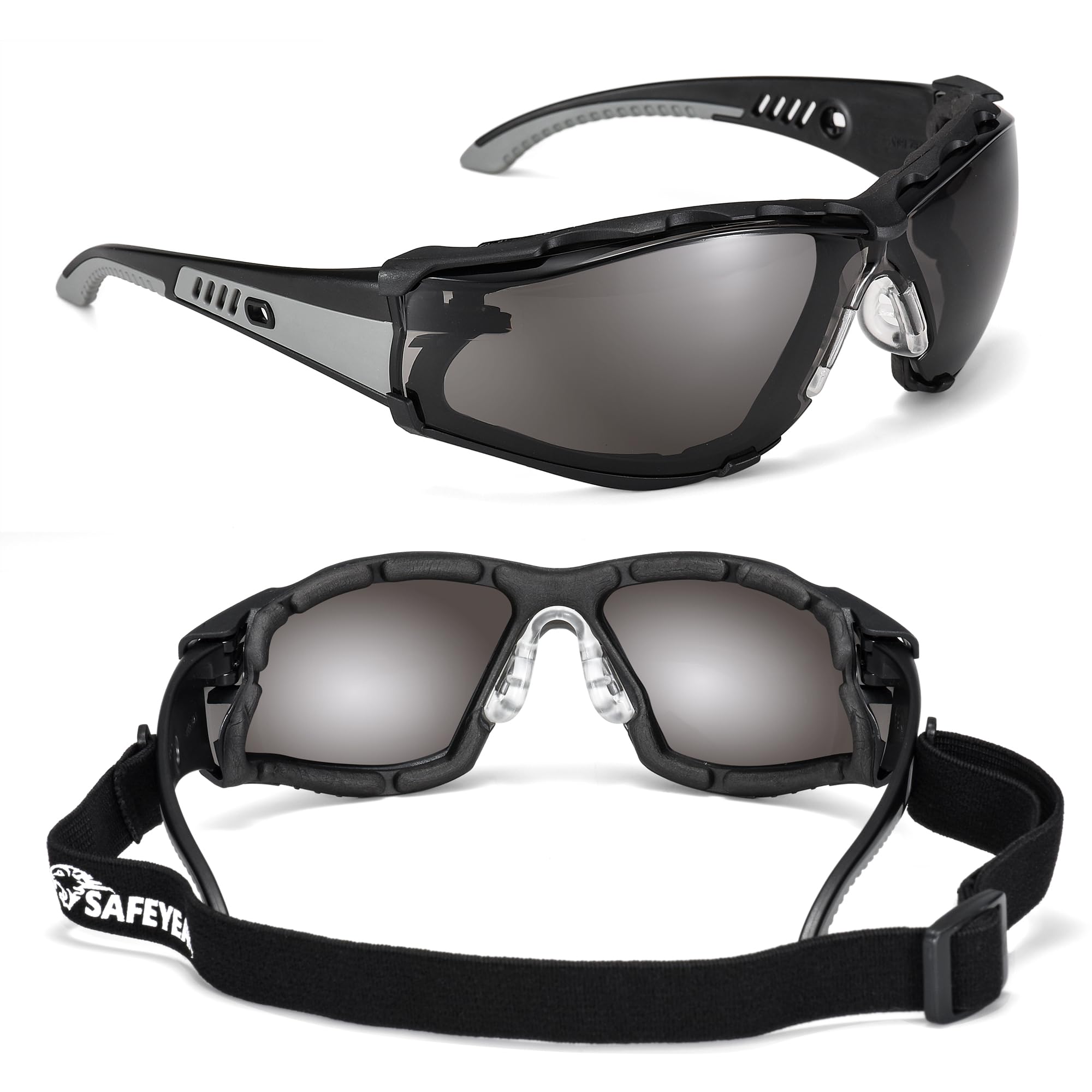
Tinted Safety Glasses
Open-frame tinted safety glasses that cut glare and UV on bright days while still meeting basic impact protection standards.
You'll be sent to Amazon in your country. Indicative price — live, localised pricing where available. As an Amazon Associate we earn from qualifying purchases.
Pros
- Cuts glare on sunny days, so it's easier to see cut edges and hazards underfoot
- Light and cool to wear all day compared with enclosed goggles
- Wraparound shape gives decent side coverage for an open-frame design
Cons
- No seal around the eyes — fine dust and small debris can still get in from below or the sides
- Tinted lens is the wrong choice for shaded woodland or overcast days
- Not a substitute for a face shield when running a metal blade
What it does
Working a brush cutter in full sun for a few hours is tiring on the eyes even before you factor in flying debris — squinting against glare makes it harder to spot stones, wire, or uneven ground, and that’s when mistakes happen. These glasses tackle that problem with a tinted, UV400-coated polycarbonate lens that knocks the glare down without turning the world so dark you lose contrast on what’s in front of the blade or line head. The frame carries an EN 166 impact rating, so the lens itself is tested against fast-moving debris strikes, not just sold as ordinary sunglasses.
They’re built as open-frame, wraparound glasses rather than enclosed goggles. That keeps them light, keeps them cool on a hot day, and stops the fogging problem that enclosed eyewear can suffer from — but it also means there’s no seal against the face. Dust, grass fragments and grit thrown up from below or the side can still find their way past the frame, especially when working in dry, dusty conditions or dense low growth.
Choosing and fitting
There’s no bore size or shaft compatibility to think about here — like most eyewear, fit comes down to the frame shape and the rigid arms rather than any measurement tied to the machine. The arms are fixed rather than elasticated, so they sit like a normal pair of glasses; if you already wear prescription glasses, check the wraparound shape is generous enough to go over them, or plan to wear these instead rather than on top.
The tint is the main decision point. It’s the right lens for open fields, roadside verges, and any job done in strong, direct sun, where cutting glare matters more than sealing out dust. It’s the wrong choice for early mornings, overcast days, or working under trees and hedgerows, where a darker lens just makes it harder to see what you’re cutting. If your work mixes both conditions, it’s worth keeping a clear pair of goggles alongside these rather than treating tinted glasses as an all-day, all-weather solution.
Honest limitations
These protect the front and sides of the eyes from typical mechanical impact, and that’s genuinely useful — but they’re not full-seal protection, and they offer no defence against a blade contact injury or a stone strike to the wider face. For light trimming with a line head on a sunny day, they’re a sensible, comfortable choice. For heavier clearing with a metal blade, near others, or in dusty scrub, pair them with a face shield or enclosed goggles rather than relying on tinted glasses alone.