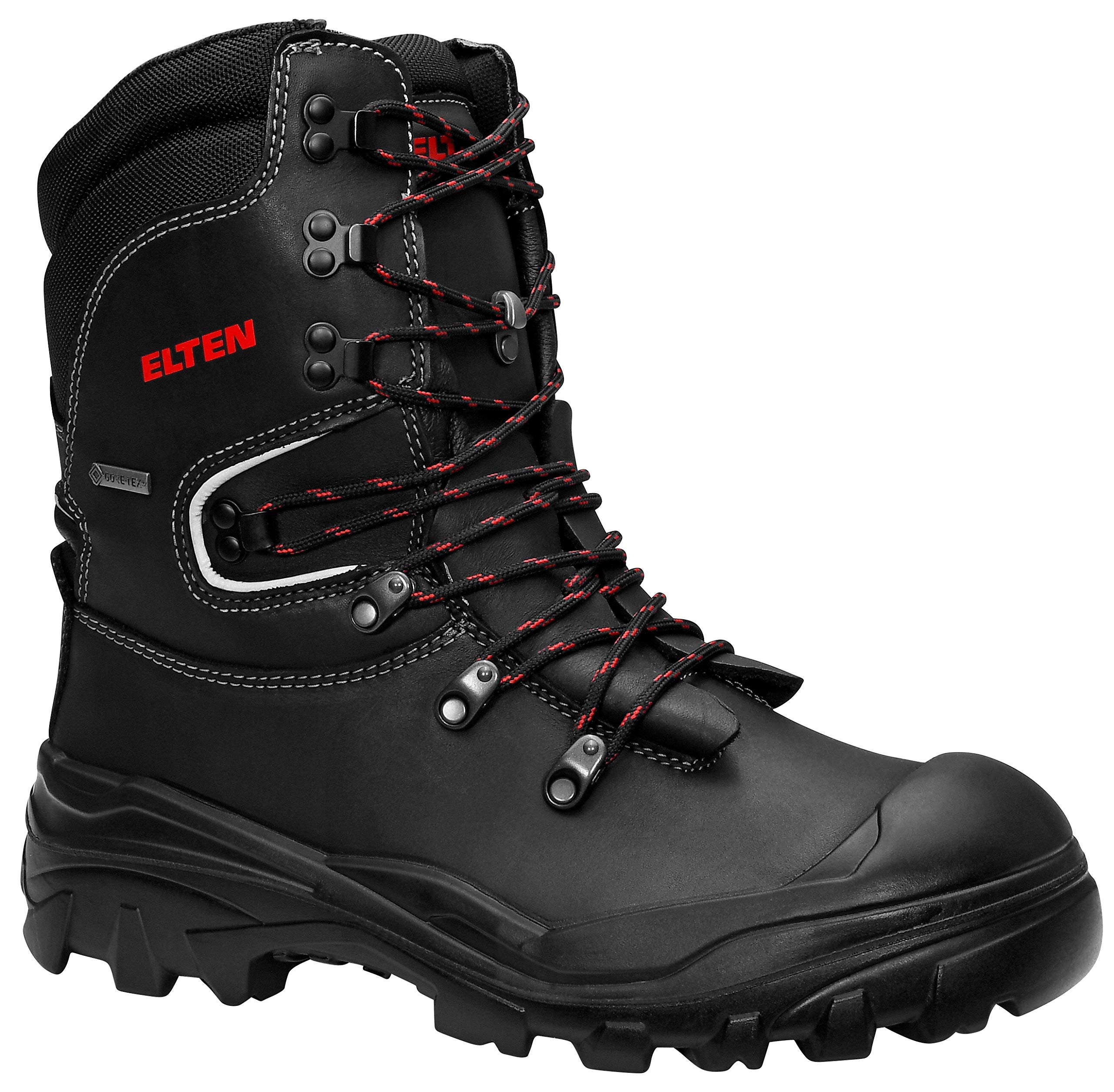
Forestry Safety Boots S3
S3-rated steel-toe safety boots with waterproof leather and a cleated sole, built for standing all day on rough, wet ground with a brush cutter.
You'll be sent to Amazon in your country. Indicative price — live, localised pricing where available. As an Amazon Associate we earn from qualifying purchases.
Pros
- S3 rating covers steel toe, sole penetration resistance and water-resistant upper in one boot
- Cleated sole gives real grip on wet grass, mud and slopes
- Ankle support helps on the uneven ground brush cutting often involves
Cons
- S3 is a general safety standard, not a chainsaw-cut-resistant rating like EN 381
- Steel toe adds weight compared with a trainer-style work boot
- Leather needs occasional care to keep the waterproofing working
What they do
Brush cutting puts your feet in the path of thrown stones, dropped fuel cans, a slipped blade, and simply hours of standing on lumpy, wet, or sloped ground. A dedicated safety boot rated to EN ISO 20345 S3 covers the basics that trainers or wellies don’t: a steel toe cap rated for impact and compression, a penetration-resistant midsole so a dropped tool or a stray nail in the undergrowth can’t come through the sole, and a waterproof leather upper that keeps your feet dry in wet grass or light rain. The cleated, oil-resistant sole also matters more than people expect — most falls with a brush cutter running happen on a slippery slope or wet bank, not from the machine itself, so grip underfoot is as much a safety feature as the toe cap.
Ankle height with proper lace support is worth having too. Brush cutting often means walking on tussocky grass, hidden ruts, or sloped ground you can’t fully see through the vegetation, and a boot that supports the ankle reduces the chance of a rolled ankle turning a routine job into an injury.
Choosing and fitting
These are a standard-lacing boot, so there’s no bore size or shaft compatibility to think about — the main fit decision is sizing and width. Steel-toe boots run less forgiving than a soft-toe work boot because the cap doesn’t flex, so it’s worth trying a half-size up if you plan to wear thick socks, and checking width if you have a wider foot, since the steel cap won’t stretch with wear the way leather does.
Honest limitations
An S3 rating is a solid general-purpose safety standard, but it is not the same as chainsaw-specific protective footwear. If you’re also running a chainsaw regularly, look for boots additionally rated to EN 381-5 (chainsaw leg and foot protection) — a plain S3 boot gives no cut resistance against a moving chain. For brush cutter and strimmer work, though, where the main risks are impact, punctures, wet ground and slips, S3 is the right level of protection without the extra cost, weight and stiffness of chainsaw-rated boots. As with any leather boot, waterproofing fades with wear and needs occasional reproofing to keep performing.