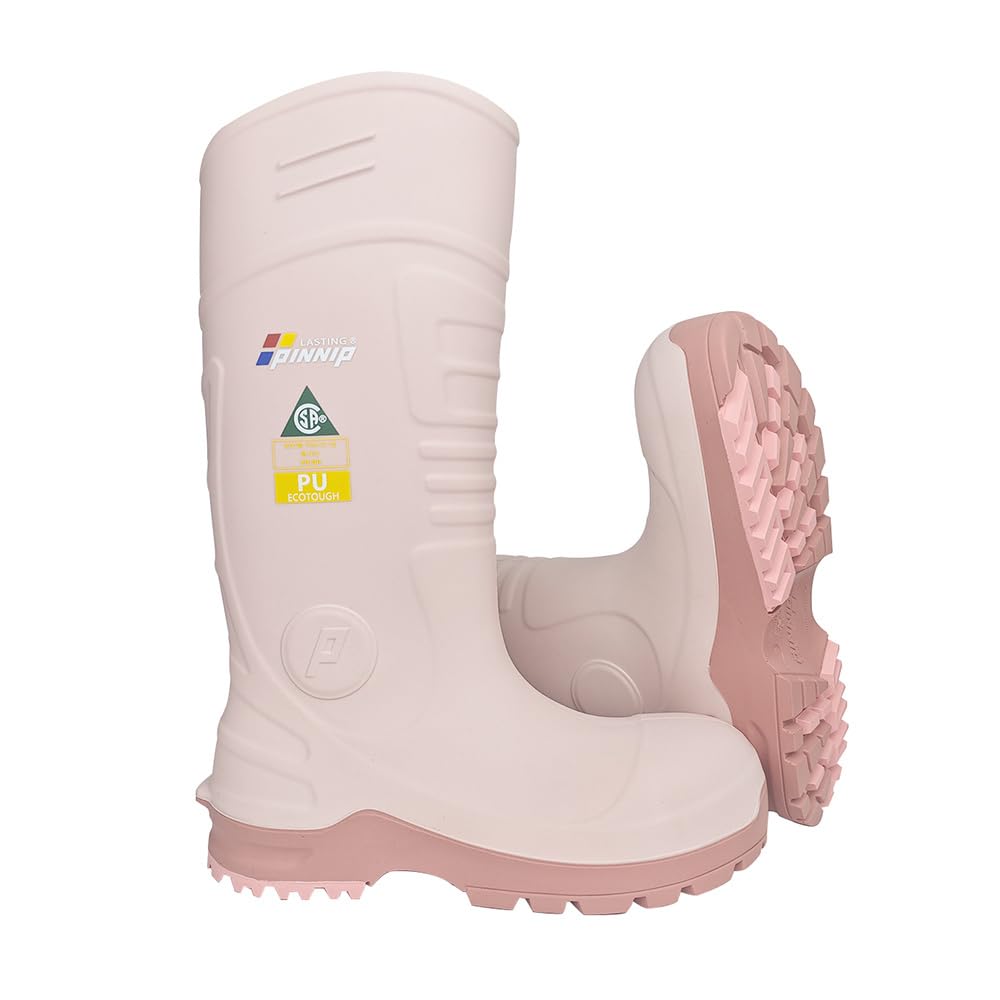
S5 Forestry Wellingtons
Waterproof rubber safety wellingtons with chainsaw-rated cut protection and steel toe, built for wet ground work with a brushcutter or saw.
You'll be sent to Amazon in your country. Indicative price — live, localised pricing where available. As an Amazon Associate we earn from qualifying purchases.
Pros
- Fully waterproof one-piece rubber construction, unlike fabric cut-resistant boots
- Genuine chainsaw-tested cut protection built into the front, not just a wellington with a steel cap
- Cleated sole copes well with mud, standing water and long wet grass
Cons
- Class 1 rating suits lower chain speeds, not top-spec professional saws
- Rubber uppers are hotter and less breathable than leather or fabric boots
- Bulkier and heavier underfoot than a lace-up safety boot
What they do
A standard steel-toe wellington keeps your feet dry and protects against impact, but it does nothing if a chain or blade makes contact. These are rated to EN ISO 17249, Class 1, the same chainsaw-protection standard used on cut-resistant trousers and boots: tested at a chain speed of 20 m/s, an outer layer is cut through instantly but the loose reinforced fibres underneath are pulled into the drive sprocket, jamming the chain before it reaches the foot. That protection is built into a fully moulded rubber wellington rather than a fabric or leather boot, so you get chainsaw-rated safety and complete waterproofing in one piece of footwear.
For brushcutter work this is worth having even without a chainsaw close by. A slipped strimmer head or a glancing hit from a metal brush blade behaves in a similar way to a chain on contact, and the reinforced front panel gives a real buffer that a plain rubber boot doesn’t. The steel toe cap adds impact and compression protection on top, and the cleated, oil-resistant sole holds its grip in the mud, wet grass and standing water where wellingtons earn their keep over a lace-up boot.
Choosing and fitting
There’s no bore size or shaft to match — these are a pull-on wellington sized like ordinary work footwear by EU shoe size. Moulded rubber doesn’t flex or break in the way leather does, so it’s worth trying them on with the socks you’ll actually wear (thick wool socks for winter, thinner ones for summer) before deciding on size, and going up half a size if you’re between sizes rather than down.
Class 1 covers most garden, smallholding and brushcutter-plus-occasional-chainsaw use around wet or rough ground. If you run a high-output professional saw regularly, look for a Class 2 or 3 rated boot instead, since Class 1 is tested only up to 20 m/s.
Honest limitations
Class 1 is a floor, not a ceiling: it protects against the chain speeds most brushcutters and entry-level saws produce, but not faster professional equipment. Rubber wellingtons also run hotter and are less breathable than a fabric or leather safety boot, so they’re a better fit for wet, muddy conditions than for long dry days in warm weather. As with any cut-resistant safety gear, the protective layer is a last line of defence rather than a substitute for proper technique, and a boot that’s actually been cut into should be retired rather than trusted again.