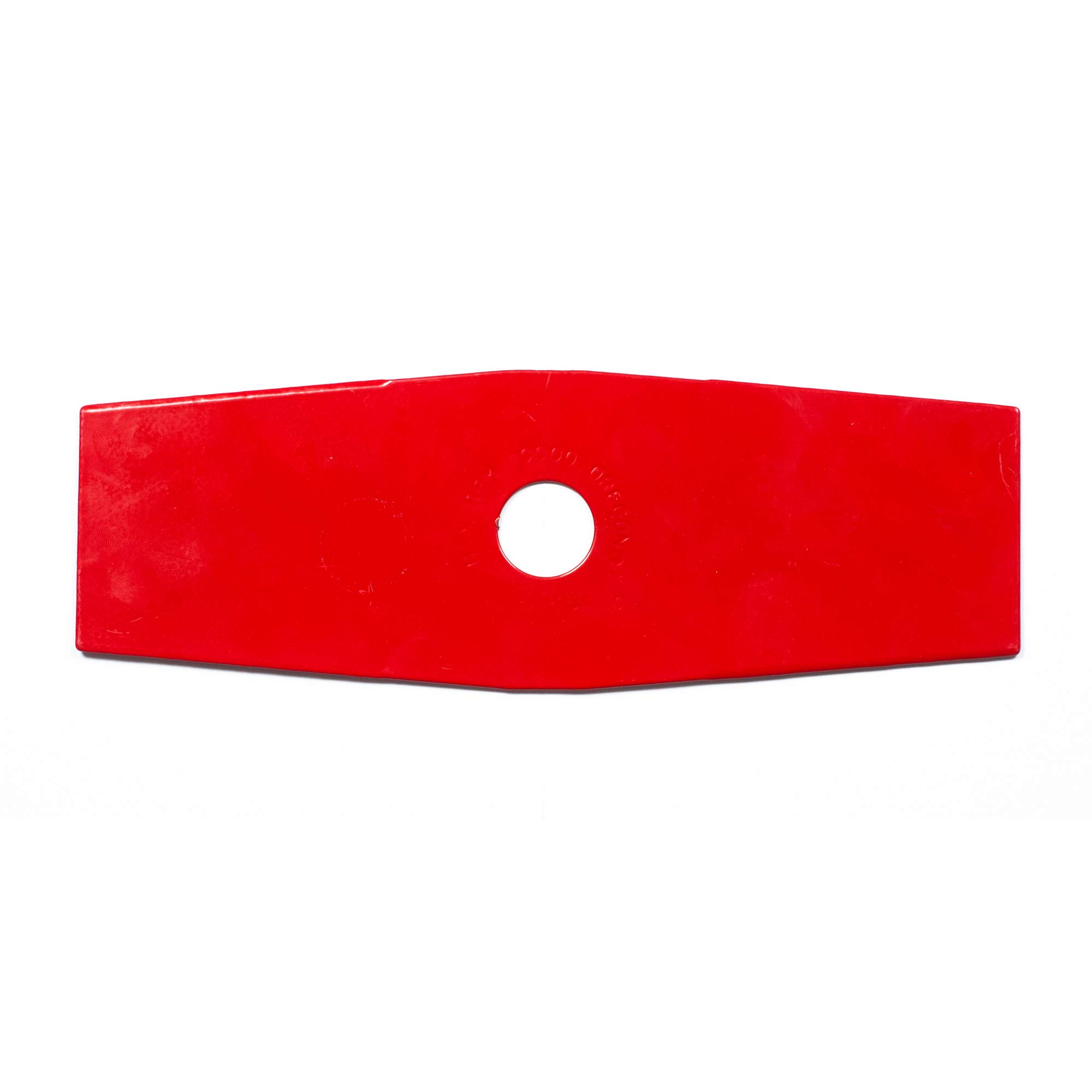
Oregon 2-Tooth Blade 255mm
A 255mm hardened-steel 2-tooth grass blade for petrol brush cutters that need a fast, simple slicing action through grass and light weeds.
You'll be sent to Amazon in your country. Indicative price — live, localised pricing where available. As an Amazon Associate we earn from qualifying purchases.
Pros
- Simple 2-tooth design cuts cleanly through grass and light weeds with less vibration than multi-tooth blades
- 255mm diameter suits mid-size petrol brush cutters without overloading the gearbox
- Cheap enough to keep a spare on hand, so a chipped edge doesn't stop the job
- Fits most brush cutters via the standard 25.4mm bore and reducer rings
Cons
- Only two teeth means a slightly coarser cut than a 3- or 4-tooth blade at the same speed
- Not suitable for brambles, saplings or anything with real woody stem
- Edge dulls or chips quickly against stones, wire or compacted soil
What it does
The Oregon 2-Tooth Blade 255mm is a lightweight steel grass blade built for straightforward cutting rather than heavy brush clearance. Its two curved teeth give a simple, well-balanced slicing action that works well through grass, light weeds and thin ground cover — it spins smoothly with less vibration than busier 3- or 4-tooth blades, which makes it a comfortable choice for longer sessions on lawns, verges and paddock edges. It’s a step up from a line head in terms of speed and reach, but it’s still a grass blade at heart, not a scrub or wood-cutting tool.
What to fit it to
This is a bolt-on metal blade, so it only fits brush cutters designed to take metal attachments — typically petrol machines with a rigid straight shaft rather than line-only trimmers. The bore is the widely used 25.4mm standard, and most machines already carry a matching reducer ring or have one included in the box. At 255mm across, it sits in the middle of the common blade-diameter range, so it suits a broad spread of mid-power petrol brush cutters without demanding the extra torque a larger 300mm blade would need. Always check the bore size and the fixing nut or bolt arrangement against your own machine before assuming a straight swap, since fitting hardware does vary between brands.
Honest limitations
A 2-tooth blade like this is built for grass and light weeds, not brush clearance. It will bend or deflect off brambles and anything with a genuinely woody stem rather than cut through cleanly — for that kind of growth, a 3-tooth or 8-tooth blade is the better tool. The hardened steel holds an edge reasonably well through normal grass cutting, but a single strike on a hidden stone, fence wire or compacted soil is enough to chip or roll a tooth, and there’s no sharpening that fully restores it. Because it’s such a low-cost item, many users simply keep a spare rather than get it professionally resharpened. As with any metal blade attachment, proper eye, face and leg protection are essential, since debris and stone fragments can be thrown at speed.