The best brush cutters for rough, uneven ground
On rough, bumpy or awkward ground, control and balance beat brute power. A lighter, well-balanced machine is safer and far less tiring. Here are the best picks.
In short:On rough, uneven ground, pick a light, balanced machine with a harness and use line where you can't see the ground. The Husqvarna 129R (5.4 kg without cutting gear, double harness) and Stihl FS 70 C-E (5.4 kg, ErgoStart) are light petrol options. Cordless machines are lighter and stop instantly: the Stiga BC 700e (4.7 kg without battery, five harness hook positions), Bosch AdvancedBrushCut 36V (4.1 kg with battery), Makita DUR368LZ (3.2 kg bare) and Worx WG183E (2.9 kg).
Our picks, ranked
- 1
- 2
- 3
- 4
- 5
- 6



Control beats power
On rough, bumpy or awkward ground — tussocks, molehills, roots, stones — a heavy machine is hard to keep level and tiring to steer. The best tools here are light, well balanced and carried on a harness, so the head follows the ground rather than digging in.
Our picks
- Husqvarna 129R — 0.85 kW, 5.4 kg without cutting gear, 43 cm cut, bullhorn handle and double harness.
- Stiga BC 700e — 48V brushless, 38 cm Tap&Go line, five harness hook positions to balance the machine; 4.7 kg without battery.
- Bosch AdvancedBrushCut 36V — 4.1 kg with battery, 33 cm line and 23 cm metal blade.
- Makita DUR368LZ — 3.2 kg bare twin-18V trimmer with a loop handle and reverse switch for tangled grass.
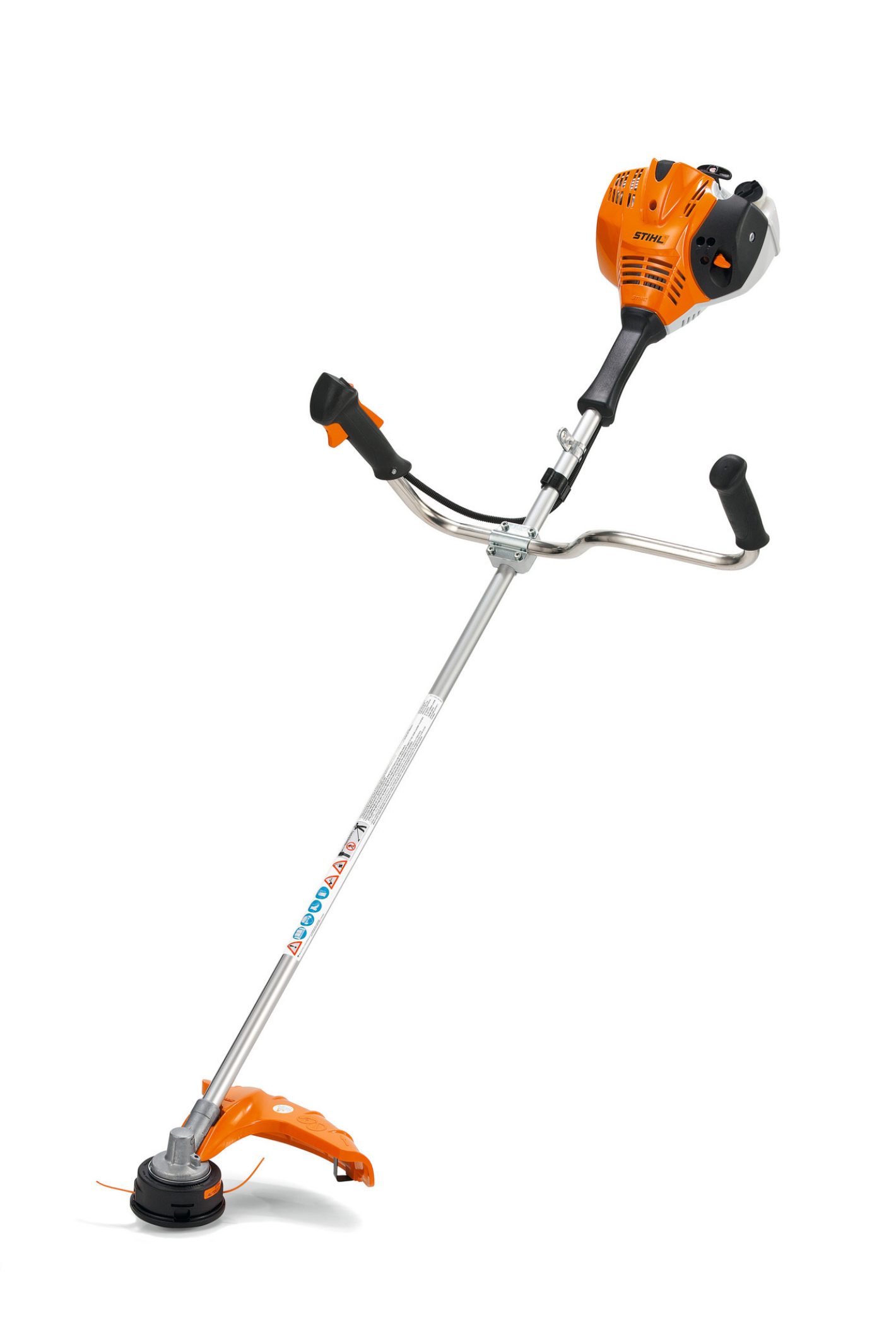
- Stihl FS 70 C-E — 0.9 kW petrol with ErgoStart, 5.4 kg without fuel and cutting tool.
- Worx WG183E — 2.9 kg line trimmer with two batteries, for grassy rough ground.
Line first on unknown ground
On ground you don’t know, use the line head: it flexes off stones and roots instead of kicking back. Walk the area first and remove wire, stones and debris. Switch to a blade only where you can see the base of the growth.
Footing and technique
Wear boots with good grip, keep your feet apart and move steadily. Cut across slopes, never up and down, and keep the head on the downhill side. Take breaks — rough ground is tiring even with a light machine. See the best brush cutters for slopes and safety gear.
Our picks at a glance
| Model | Type | Engine / power | Weight | Rating |
|---|---|---|---|---|
| Husqvarna 129R | Petrol | 27.6 cc · 2-stroke | 5.4 kg excl. cutting equipment | 8 / 10 |
| Stiga BC 700e | Cordless | 48V ePower · Brushless | 4.7 kg without battery (retailer) | 8.1 / 10 |
| Bosch AdvancedBrushCut 36V | Cordless | 36V Power For All | 3.4 kg bare, 4.1 kg with battery (Bosch) | 8.3 / 10 |
| Makita DUR368LZ | Cordless | 36V LXT · Brushless | 3.2 kg (Amazon item weight, bare) | 8.4 / 10 |
| Stihl FS 70 C-E | Petrol | 27.2 cc · ErgoStart | 5.4 kg (without fuel and cutting tool) | 8.4 / 10 |
| Worx WG183E 40V | Cordless | 40V PowerShare (2× 20V) | 2.9 kg (Amazon item weight) | 7.6 / 10 |
Weights are as stated by the maker, UK retailers or Amazon, so some include a battery or cutting gear and others don't — see each review for details.
Compare our picks head to head
Frequently asked questions
What makes a brush cutter good on uneven ground?
Low weight, good balance and a harness that holds the head at a steady height over bumps and hollows. Adjustable harness points, like the five on the Stiga BC 700e, help you get the balance right.
Should I use a blade on rough ground?
Only where you can see what you're cutting. Hidden rocks and roots damage blades and cause kickback, so a line head is safer on unknown rough ground.
How do I avoid scalping bumps?
Hold the head a little higher than on a lawn and let it follow the ground, tilting slightly as you go over humps. A wider line cut, like the Husqvarna 129R's 43 cm, covers ground with fewer passes.