The best brush cutters for slopes & hills
On a slope, weight and balance beat brute power — a heavy machine is tiring and harder to control on uneven ground. These lighter picks keep you safe and steady.
In short:For slopes and banks, choose light, balanced machines with a harness. The Husqvarna 129R (5.4 kg without cutting gear, double harness) and Stihl FS 70 C-E (5.4 kg, ErgoStart) are light petrol machines; Honda's UMK 425 GX25 four-stroke is 360° inclinable and weighs 5.9 kg dry. Cordless options are lighter still: the Bosch AdvancedBrushCut 36V (4.1 kg with battery, metal blade), Makita DUR368LZ (3.2 kg bare) and Worx WG183E (2.9 kg) for grassy banks.
Our picks, ranked
- 1
- 2
- 3
- 4
- 5
- 6



Light and balanced beats powerful
On sloping or uneven ground, a heavy machine fights you — it’s tiring to hold level and harder to control. The best slope machines are light and well balanced, with a harness to take the load off your arms and a handle that gives a secure, two-handed grip.
Our picks
- Husqvarna 129R — 27.6 cc, 0.85 kW, 5.4 kg without cutting gear, bullhorn handle and double harness.
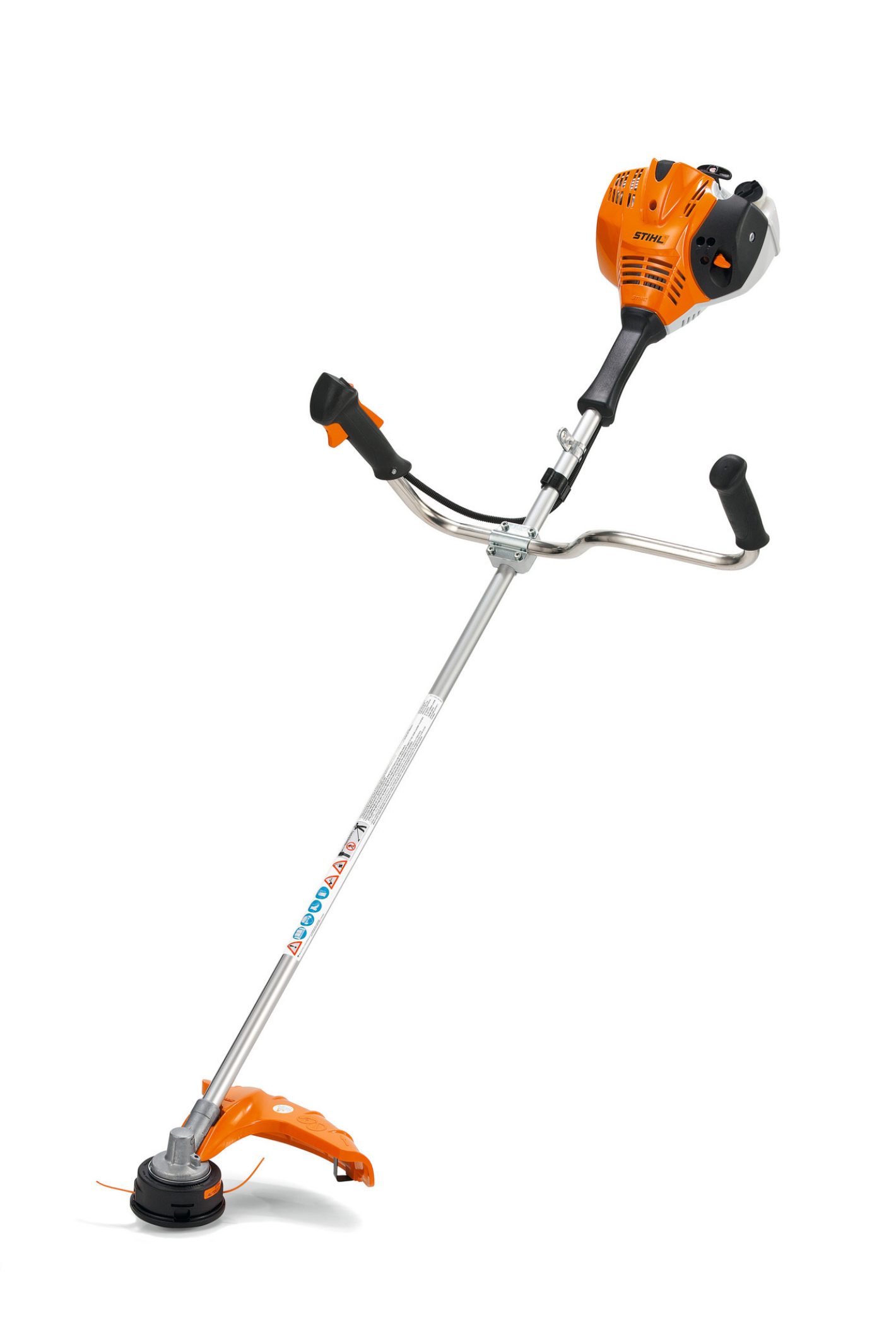
- Stihl FS 70 C-E — 0.9 kW, 5.4 kg without fuel and cutting tool, ErgoStart and a bike handle.
- Bosch AdvancedBrushCut 36V — 4.1 kg with battery, 23 cm metal blade, quiet brushless motor.
- Makita DUR368LZ — 3.2 kg bare, loop handle, Automatic Torque Drive; for LXT owners.
- Honda UMK 425 LE — GX25 four-stroke that’s 360° inclinable, 5.9 kg dry, with a blade.
- Worx WG183E — 2.9 kg line trimmer with two batteries, for grassy banks.
How to cut a slope safely
- Cut across the slope, working from the bottom up in horizontal strips.
- Keep the head on the downhill side of your feet and your weight on the uphill foot.
- Use the harness and keep both hands on the handle.
- Never cut wet slopes, and wear boots with good grip.
- Mind what’s below — cuttings and stones roll; keep people clear.
Steep banks
For very steep embankments, consider a machine with a loop handle for a closer stance, or work from the top with a rope or by stepping down in stages. See the best brush cutters for embankments and uneven ground.
Our picks at a glance
| Model | Type | Engine / power | Weight | Rating |
|---|---|---|---|---|
| Husqvarna 129R | Petrol | 27.6 cc · 2-stroke | 5.4 kg excl. cutting equipment | 8 / 10 |
| Stihl FS 70 C-E | Petrol | 27.2 cc · ErgoStart | 5.4 kg (without fuel and cutting tool) | 8.4 / 10 |
| Bosch AdvancedBrushCut 36V | Cordless | 36V Power For All | 3.4 kg bare, 4.1 kg with battery (Bosch) | 8.3 / 10 |
| Makita DUR368LZ | Cordless | 36V LXT · Brushless | 3.2 kg (Amazon item weight, bare) | 8.4 / 10 |
| Honda UMK 425 LE | Petrol | 25 cc · GX25 4-stroke | 5.9 kg dry | 8.2 / 10 |
| Worx WG183E 40V | Cordless | 40V PowerShare (2× 20V) | 2.9 kg (Amazon item weight) | 7.6 / 10 |
Weights are as stated by the maker, UK retailers or Amazon, so some include a battery or cutting gear and others don't — see each review for details.
Compare our picks head to head
Frequently asked questions
What makes a brush cutter good for slopes?
Low weight, good balance and a harness that keeps the head level. Engines that run at any angle help on banks: two-strokes do, and Honda's GX four-strokes are 360° inclinable.
Is cordless or petrol better on a slope?
Cordless machines are often lighter and stop instantly when you release the trigger, which helps on steep ground. A light petrol machine with a double harness, like the Husqvarna 129R, works well on bigger banks.
How should I cut a slope?
Cut across the slope, not up and down, with firm footing on the uphill side of the head. Use the harness, never overreach, and stop if the ground is wet or slippery.