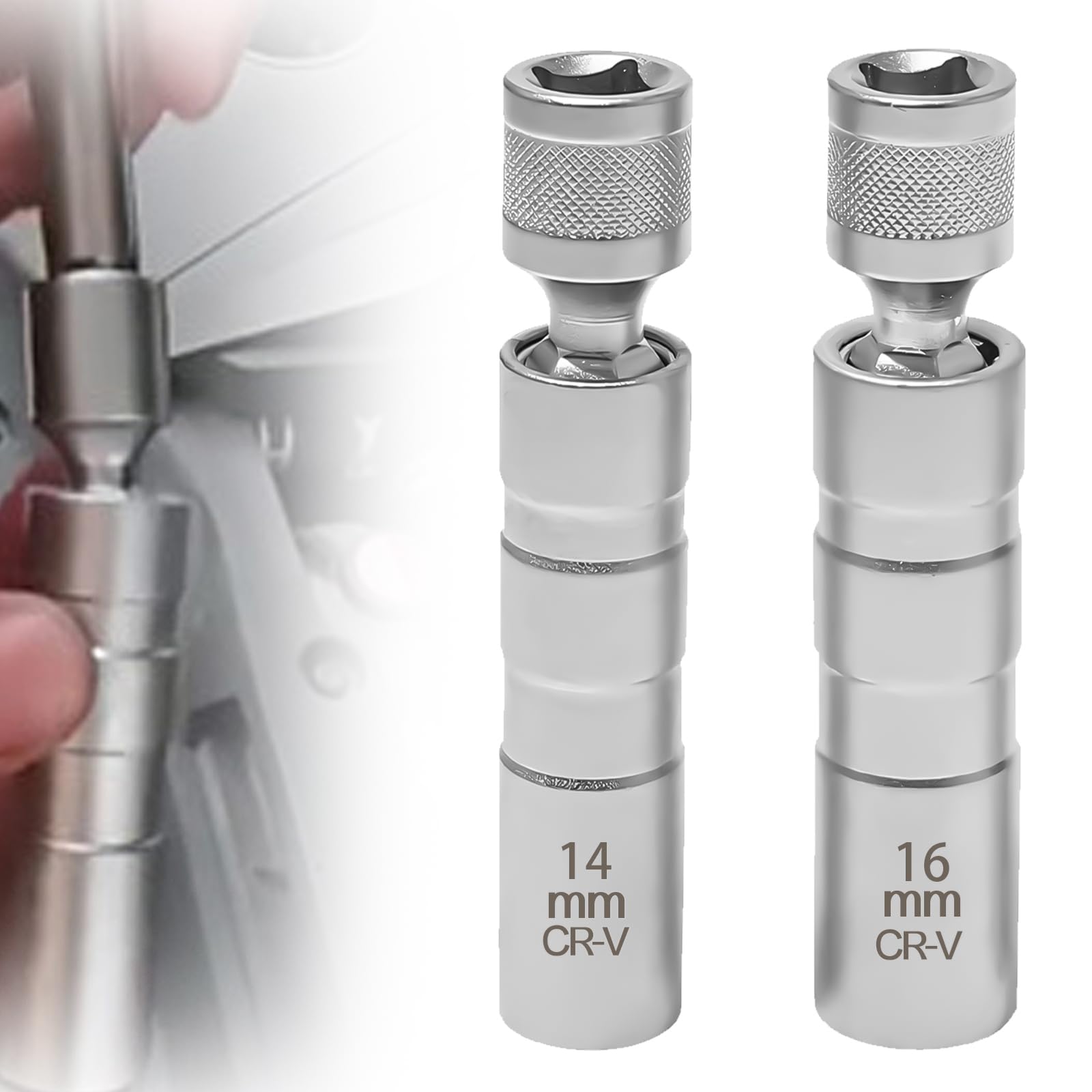
Spark Plug Wrench
A universal spark plug socket wrench for removing and refitting the spark plug on a petrol brushcutter, strimmer or similar small 2-stroke engine.
You'll be sent to Amazon in your country. Indicative price — live, localised pricing where available. As an Amazon Associate we earn from qualifying purchases.
Pros
- Cheap, compact tool that earns its place in any petrol brushcutter kit
- Rubber insert holds the plug so it doesn't fall into the cylinder or shroud
- Dual-size sockets cover most small engines, not just one brand
Cons
- Basic folding handles don't give much leverage on a seized or over-tight plug
- Some kits are all metal with no rubber grip, making the plug easier to drop
- Won't fit larger or non-standard plug hex sizes without an adapter
What it does
A spark plug wrench is a socket sized specifically to fit over a spark plug’s hexagonal base, used to loosen and retighten it without rounding off the corners the way an ill-fitting standard spanner can. On a brushcutter, the plug sits in a fairly tight recess under the cylinder shroud, so a slim, purpose-made socket reaches it far more easily than a general socket set. Most versions for small engines are dual-ended, with one size fitting the more common 16mm plug hex and the other a smaller size found on some compact engines, and many include a rubber insert inside the socket that grips the plug’s ceramic top. That grip matters more than it sounds: it lets you lift the plug straight out once it’s unscrewed, and lower a new one back into place, without it slipping loose and disappearing down into the shroud or engine bay.
Choosing the right one and using it
Before buying, it’s worth checking the hex size stamped on your existing plug or looking up the plug part number in your brushcutter’s manual, since sizes aren’t fully universal even though most small petrol engines cluster around a handful of common sizes. A wrench with a folding or T-bar handle gives more leverage than a bare socket on its own, which helps when a plug has seized slightly from heat and carbon build-up over a season of use. When removing the plug, let the engine cool first, brush any loose dirt away from the plug recess so it doesn’t fall in, and turn the wrench firmly but without forcing it if the plug feels unusually tight — a squirt of penetrating oil and a short wait solves most stuck-plug problems. When refitting, start the plug by hand to avoid cross-threading, then snug it with the wrench rather than overtightening, since too much torque can strip the aluminium thread in the cylinder head.
Honest limitations
This is a simple hand tool, not a torque wrench, so it won’t tell you exactly how tight the plug is — on most brushcutters that’s fine, since these engines don’t need the precise torque figures larger machinery does, but it does mean over-tightening is possible if you’re heavy-handed. Cheaper folding versions flex a little under real force, so if a plug is genuinely seized, a proper rigid socket and ratchet from a wider tool set will do the job more comfortably. It’s also only useful if you already know roughly what condition your plug is in — checking the electrode gap and colour, or knowing when to replace rather than just clean it, is a separate skill this tool doesn’t teach on its own.