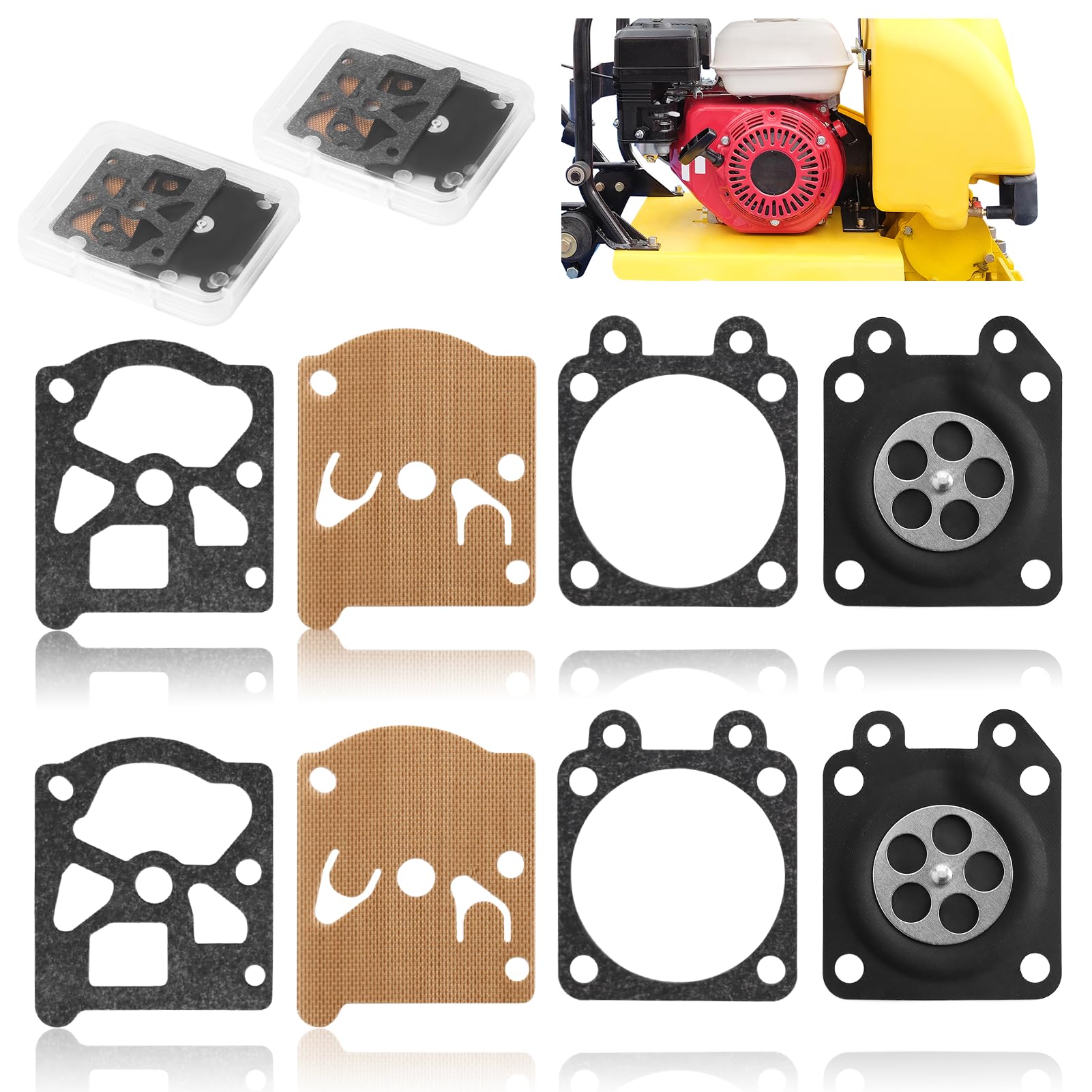
Carburettor Gasket Kit
A low-cost assortment of carburettor and crankcase gaskets, diaphragms and seals for rebuilding a leaking or poorly running 2-stroke brushcutter carb.
You'll be sent to Amazon in your country. Indicative price — live, localised pricing where available. As an Amazon Associate we earn from qualifying purchases.
Pros
- Very cheap way to fix a leaking or poorly sealing carburettor
- Assorted sizes mean one kit often covers several small engines
- Bundles gaskets and diaphragms together instead of buying each separately
Cons
- Assorted fit means checking each gasket against the old one before fitting
- Generic rubber may not match OEM diaphragm feel or long-term durability exactly
- Fitting means stripping the carburettor, which is fiddly on a first attempt
What it does
A small 2-stroke carburettor relies on a handful of thin paper gaskets and rubber diaphragms to keep fuel and crankcase pulses exactly where they should be. The main gasket seals the carburettor body to the crankcase or intake boot, while the metering and fuel-pump diaphragms flex with each pulse to draw fuel from the tank and meter it into the engine. These parts are cheap but not indestructible: old fuel, ethanol content, heat cycling and simple age make the paper brittle and the rubber stiff or torn. Once that happens you typically see symptoms like a rough idle, fuel weeping from the carb body, flooding on start-up, or an engine that runs fine one minute and dies the next. A gasket kit like this bundles the small parts most likely to have failed, so a full carburettor service can be done in one go rather than ordering pieces one at a time.
Choosing the right one and fitting it
Because carburettor bodies vary between manufacturers even on outwardly similar 2-stroke engines, kits sold as “universal” work by including an assortment of gasket shapes and sizes rather than one exact match. Before fitting anything, strip the carburettor down, lay the old gaskets and diaphragms out, and compare each one against the kit’s contents for matching size and hole pattern rather than assuming the packet covers your model outright. Fitting is straightforward in principle — old gasket off, surfaces cleaned of any residue, new gasket seated dry, cover screws tightened evenly — but it’s easy to nick a diaphragm or misalign a check valve on a first attempt, so working carefully and keeping track of screw positions and spring locations pays off.
Honest limitations
This is a generic aftermarket kit, not a part cut precisely to one carburettor model, so expect some trial-fitting rather than a guaranteed drop-in match every time. If the engine still runs badly after a careful rebuild, the fault may lie elsewhere — a worn carburettor body, a fouled spark plug, or an ignition problem — rather than in the gaskets themselves. It’s also not a substitute for keeping fresh fuel in the tank and draining the system before storage, since stale ethanol-blended petrol is the single biggest cause of the gaskets and diaphragms failing in the first place.