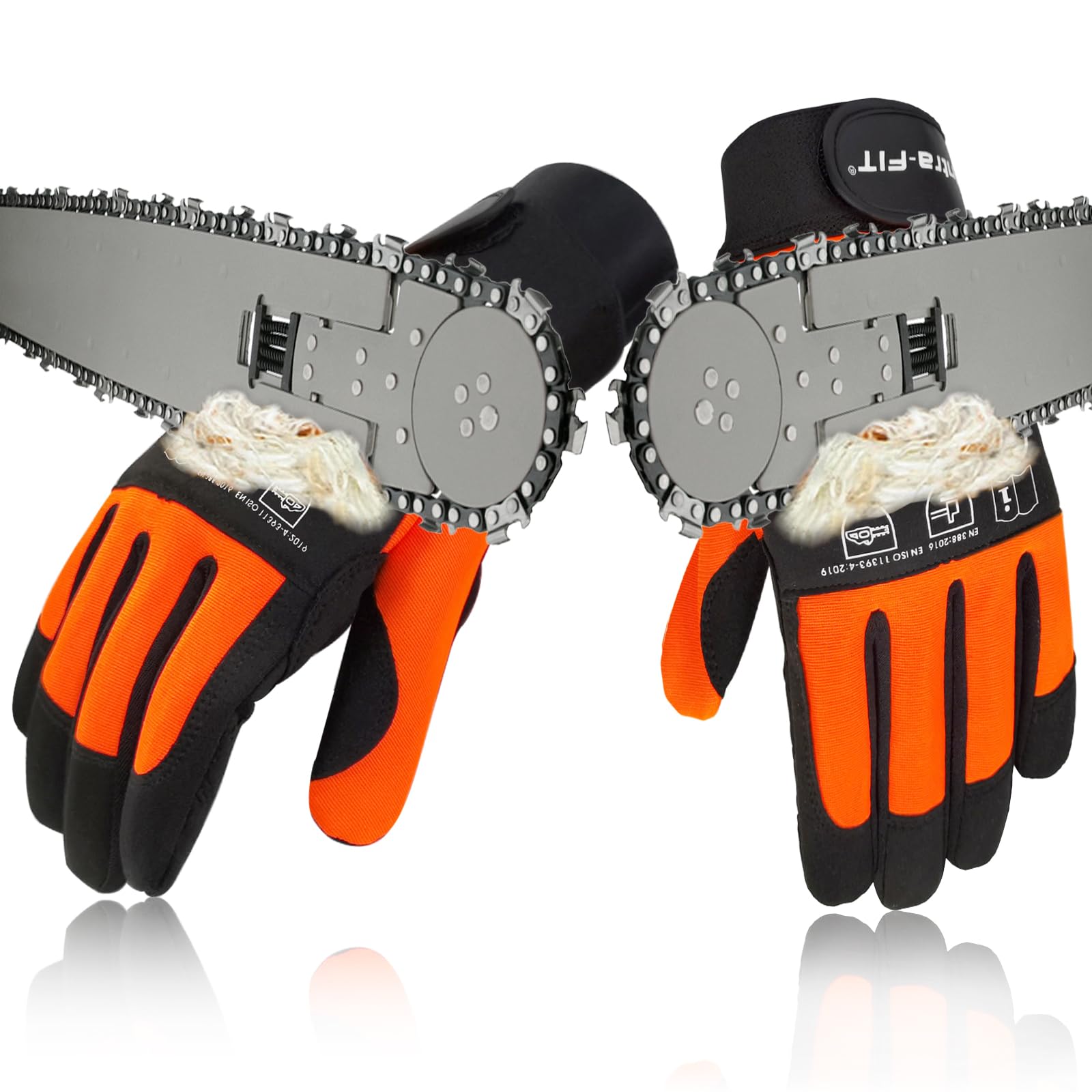
Chainsaw Safety Gloves
Cut-resistant safety gloves with a reinforced back-of-hand layer, for brushcutter and chainsaw users who want genuine hand protection, not just work gloves.
You'll be sent to Amazon in your country. Indicative price — live, localised pricing where available. As an Amazon Associate we earn from qualifying purchases.
Pros
- Reinforced back-of-hand panel targets the area most exposed to a kickback or slipped blade
- Grippy, reinforced palm holds up well on vibrating shafts and damp handles
- Extended cuff and wrist strap keep debris and dust out during brush clearing
Cons
- Cut resistance is concentrated on the back of the hand, not the whole glove
- Bulkier than plain gardening gloves, so fine adjustments feel less precise
- Not a substitute for chainsaw trousers or a face shield on the rest of the body
What they do
Ordinary gardening gloves are built for grip and blister prevention, but they offer little resistance if a blade or chain actually touches them. These gloves add a reinforced layer over the back of the hand — the area most likely to make contact during a kickback, a slipped brush blade, or an awkward reach near a running head — following the same principle as chainsaw trousers: an outer layer is cut through, but the fibres underneath are designed to jam and slow the cutting attachment before it reaches skin. The palm and fingers are separately reinforced for grip and abrasion resistance, since that’s the surface doing the actual work of holding a vibrating shaft for hours at a time.
Sold as a pair, they’re tested to EN 388 for general cut, abrasion and tear resistance, with the left-hand back panel carrying the higher chainsaw-specific protection, since that’s statistically the hand most exposed on a right-handed cut. An extended cuff with an adjustable wrist strap keeps grass clippings and sawdust from working their way in, which matters more than it sounds during a long brushcutting session.
Choosing and fitting
There’s no bore size or shaft diameter to match here — gloves are sized S to XXL like any standard work glove, and fit is what matters most. Too loose and the reinforced fingers bunch up, reducing dexterity and grip on the trigger and handles; too tight and they’re tiring to wear for long stretches. If you’re between sizes, sizing up slightly is usually the safer choice for all-day comfort, since a snug glove that pinches gets taken off first and left in a pocket.
Honest limitations
The reinforced cut layer is concentrated on the back of the hand and fingers, not woven through the entire glove, so they shouldn’t be treated as fully chainsaw-proof gloves in the way certified forestry gloves are. They’re noticeably bulkier than plain leather or fabric work gloves, which can make fiddly jobs like changing a spool or tightening a bolt slightly harder. And like any cut-resistant gear, a glove that’s actually been cut into should be replaced rather than trusted again — the protection is a last line of defence, not a reason to get closer to a moving blade than you otherwise would.