The best brush cutters with a blade
For brambles, scrub or young saplings, a metal blade is non-negotiable. This shortlist ranks petrol and cordless machines that come with one, or are set up for one.
In short:Brush cutters supplied with a metal blade include the Stiga BC 545 B (petrol, 1.25 kW, 3T blade, double harness), Makita DUR369AZ (twin 18V, 255 mm blade, bike handle), Einhell GC-BC 52 (petrol, 1.5 kW, 25.5 cm 3-tooth blade), Ryobi RBC36X26B (36V kit, 26 cm 3-tooth blade), Einhell GP-BC 36/430 (twin 18V, 25.5 cm 3-tooth blade) and Husqvarna 129R (grass blade for coarse grass). Machines like the Stihl FS 131 are fitted by the dealer with the blade you need.
Our picks, ranked
- 1
- 2
- 3
- 4
- 5
- 6




Why a blade matters
Brambles, scrub and woody stems wrap and shred nylon line. A metal blade slices through cleanly — but it needs power, a bike handle or barrier bar for control, the correct guard and a harness.
Our picks
- Stiga BC 545 B — 42.7 cc, 1.25 kW, 45 cm cut, with a 3T blade, Tap&Go head and double harness.
- Makita DUR369AZ — twin-18V brushless, U-type bike handle, 255 mm blade and 430 mm line; bare tool.
- Einhell GC-BC 52 — 51.7 cc, 1.5 kW, 25.5 cm 3-tooth blade, split shaft; budget power.
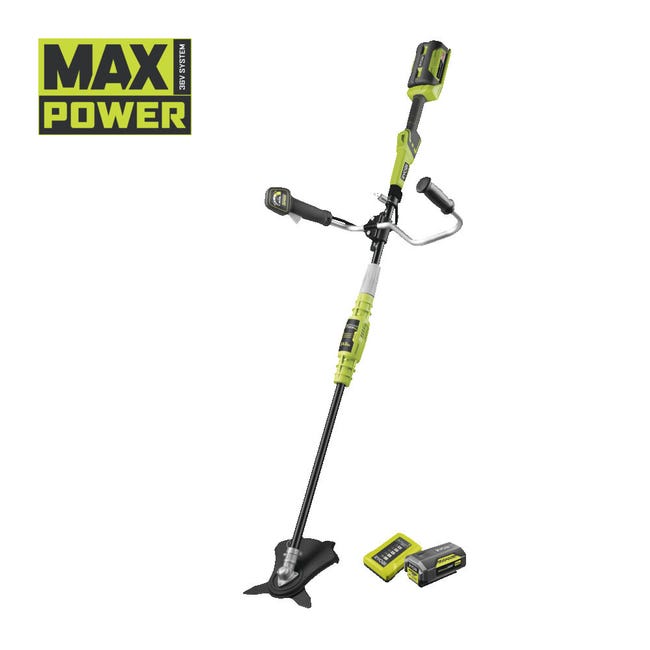
- Ryobi RBC36X26B — 36V kit with a 26 cm 3-tooth blade, bike handle and 4.0 Ah battery.
- Husqvarna 129R — 0.85 kW, 5.4 kg, supplied with a grass blade and double harness; for coarse grass and weeds.
- Einhell GP-BC 36/430 — twin-18V brushless, 25.5 cm 3-tooth blade, 43 cm line, bike handle; bare tool.
Blade types at a glance
- 3- or 4-tooth brush blade — brambles and mixed scrub.
- Grass blade (four or more teeth) — coarse grass and thick weeds.
- Saw blade — saplings and woody stems, where the manual allows.
See the best brush cutter blades and 2-tooth vs 3-tooth blades.
Using a blade safely
Fit the guard the manual specifies, keep the blade below knee height, wear a visor, ear defenders, gloves, boots and long trousers, and keep people at least 15 m away. See line vs blade and cordless brush cutters with a blade.
Our picks at a glance
| Model | Type | Engine / power | Weight | Rating |
|---|---|---|---|---|
| Stiga BC 545 B | Petrol | 42.7 cc · 2-stroke | — | 8 / 10 |
| Makita DUR369AZ | Cordless | 36V LXT · Brushless | 5.9–6.3 kg (retailers) | 8.6 / 10 |
| Einhell GC-BC 52 I AS | Petrol | 51.7 cc · 2-stroke | 8.5 kg (listing) | 7.8 / 10 |
| Ryobi RBC36X26B | Cordless | 36V MAX Power | 3.7 kg bare; 4.6–5.1 kg with battery | 8.1 / 10 |
| Husqvarna 129R | Petrol | 27.6 cc · 2-stroke | 5.4 kg excl. cutting equipment | 8 / 10 |
| Einhell GP-BC 36/430 Li BL | Cordless | 36V Power X-Change · Brushless | 6.75 kg (listing) | 8.2 / 10 |
Weights are as stated by the maker, UK retailers or Amazon, so some include a battery or cutting gear and others don't — see each review for details.
Compare our picks head to head
Frequently asked questions
Line head or blade?
Line for grass and light weeds; a metal blade for brambles, scrub and woody stems, where line wraps and shreds. Many machines take both.
Do I need petrol for blade work?
Not for light to moderate brambles: twin-battery machines like the Makita DUR369AZ and Einhell GP-BC 36/430 handle them. For dense, established scrub over large areas, petrol has more sustained power.
Is a grass blade the same as a brush blade?
No. A grass blade (like the Husqvarna 129R's four-tooth Grass 255-4) cuts coarse grass and thick weeds; a 3-tooth brush blade is for brambles; a saw blade for woody stems.