The best brush cutters for heavy, intensive use
Cut often and hard, and durability matters as much as power. These are the machines built to be run for hours, resist wear and keep starting, season after season.
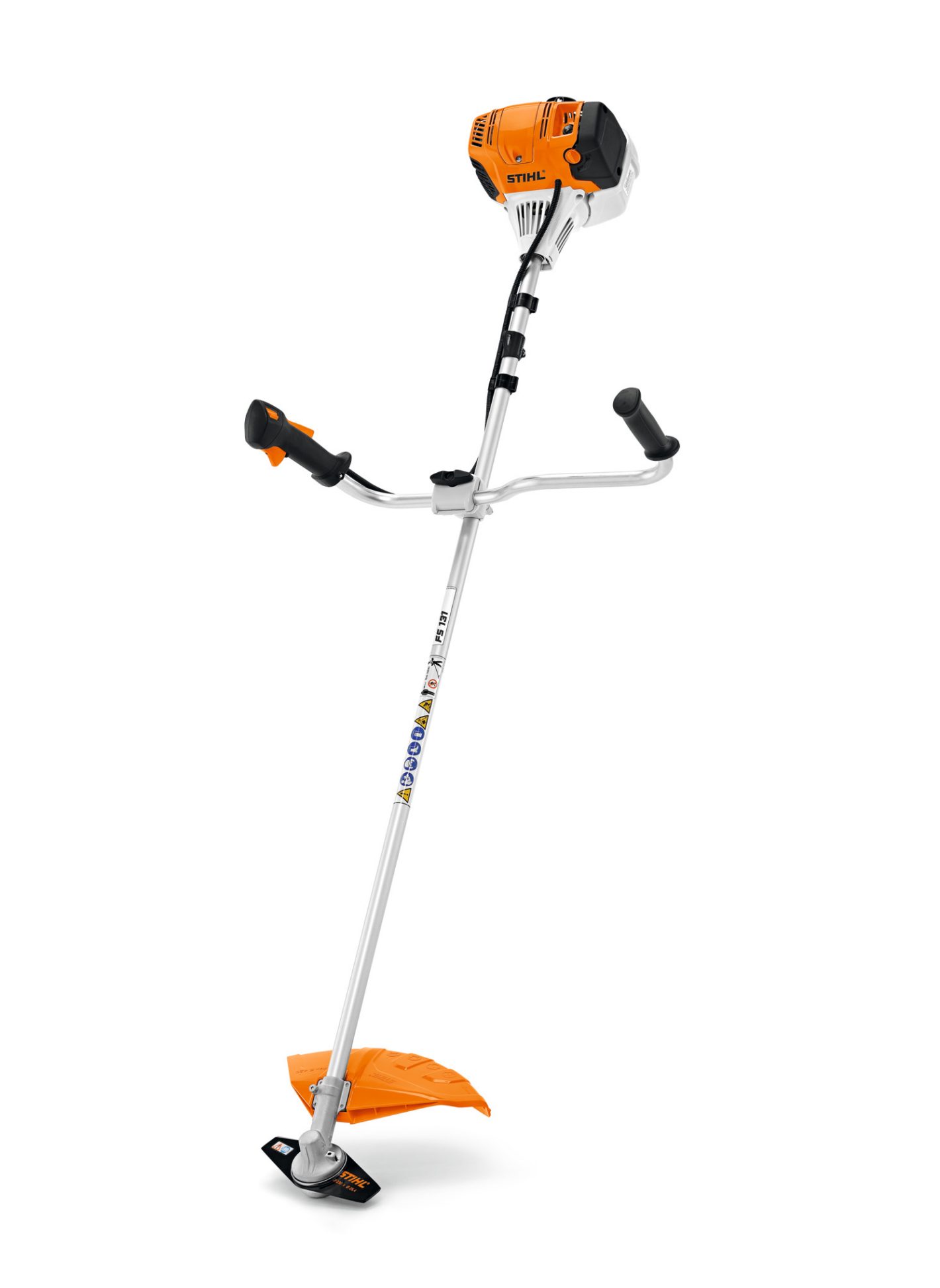
In short:For heavy, repeated use, pick machines built for long sessions: the Stihl FS 131 (semi-pro, 1.4 kW 4-MIX, 5.8 kg, 0.71 L tank), the professional Makita EM4351UH (43 cc MM4, 1.5 kW, 2.1–2.2 m/s² vibration), the Honda UMK 435 UE (GX35, double harness, five-year domestic warranty per UK retailers), and the twin-18V Makita DUR369AZ with several batteries. The Stiga BC 545 B (1.25 kW, double harness) and 52 cc Fuxtec FX-MS152 give heavy-use power for less.
Our picks, ranked
- 1
- 2
- 3
- 4
- 5
- 6


Durability first
For heavy, repeated use, a machine has to do more than cut — it has to last. That means a well-built engine or motor, low vibration for long days, a good harness, and dealer servicing and parts. Semi-pro and pro machines earn their premium when you use them constantly.
Our picks
- Stihl FS 131 — semi-professional 36.3 cc 4-MIX, 1.4 kW, Easy Start with decompression, 0.71 L tank; light at 5.8 kg without guard or tool.
- Makita EM4351UH — professional 43 cc MM4 four-stroke, 1.5 kW, universal guard, tool-less handle clamp and very low vibration.
- Honda UMK 435 UE — GX35 four-stroke on unmixed petrol, bike handle and double harness; five-year domestic warranty listed by UK retailers.
- Makita DUR369AZ — twin-18V brushless with a 430 mm line cut and 255 mm blade; rotate several LXT batteries for long days.
- Stiga BC 545 B — 42.7 cc, 1.25 kW, 45 cm cut, 3T blade and double harness in the box.
- Fuxtec FX-MS152 — 52 cc, 2.95 hp, metal brush blade; heavy-use power on a budget.
Work smarter over long days
Use a double harness adjusted so the head floats just above the ground — see how to adjust a harness. Take short breaks every 20–30 minutes, and switch hands and stance on long runs. Keep blades sharp; a dull blade means more force and more vibration.
Maintenance is non-negotiable
Heavy use demands regular servicing: clean the air filter daily in dusty conditions, check the spark plug, grease the gearbox, and use fresh fuel mixed at the manual’s ratio (or check the oil on four-strokes). See brush cutter maintenance.
Our picks at a glance
| Model | Type | Engine / power | Weight | Rating |
|---|---|---|---|---|
| Stihl FS 131 | Petrol | 36.3 cc · 4-MIX | 5.8 kg (without guard and cutting tool) | 8.7 / 10 |
| Makita EM4351UH | Petrol | 43 cc · 4-stroke MM4 | 8.5–8.6 kg (retailers) | 8.4 / 10 |
| Honda UMK 435 UE | Petrol | 35 cc · GX35 4-stroke | About 7.5 kg dry (retailers: 7.53–7.6 kg) | 8.6 / 10 |
| Makita DUR369AZ | Cordless | 36V LXT · Brushless | 5.9–6.3 kg (retailers) | 8.6 / 10 |
| Stiga BC 545 B | Petrol | 42.7 cc · 2-stroke | — | 8 / 10 |
| Fuxtec FX-MS152 | Petrol | 52 cc · 2-stroke | — | 8 / 10 |
Weights are as stated by the maker, UK retailers or Amazon, so some include a battery or cutting gear and others don't — see each review for details.
Compare our picks head to head
Frequently asked questions
What brush cutter is best for intensive use?
A semi-pro or professional petrol machine — the Stihl FS 131 or Makita EM4351UH — or a pro cordless like the Makita DUR369AZ with several batteries. Low vibration, a good harness and dealer servicing matter as much as power.
Is battery good enough for heavy use?
Twin-battery platforms handle heavy use if you rotate batteries, but for all-day, back-to-back work petrol leads on uptime.
Why does vibration matter?
Hand-arm vibration limits how long you can safely work each day. Makita declares 2.1–2.2 m/s² for the EM4351UH — very low for petrol. See brush cutter vibration and HAVS.