The best brush cutters for a wildflower meadow
Managing a wildflower meadow means cutting on your terms — one or two big cuts a year, with control around flowers and seedheads. These are the machines we'd use.
In short:A wildflower meadow is usually cut once in late summer, then raked to keep fertility low. Good machines have smooth throttle control and a wide line cut: the Stihl FS 70 C-E (0.9 kW, ErgoStart), Husqvarna 129R (0.85 kW, 43 cm, double harness), Honda UMK 425 (GX25 four-stroke) and Makita EM2651UH (MM4, 5.6 kg, low vibration). The twin-18V Makita DUR369LZ cuts 430 mm quietly, and the budget Einhell GC-BC 25/1 comes with a 42 cm line spool and a 3-tooth blade.
Our picks, ranked
- 1
- 2
- 3
- 4
- 5
- 6


What matters for a meadow
Cutting a meadow isn’t like mowing a lawn. You’re managing tall grasses and flower stems, usually in one big cut a year, and you want to cut low and evenly without tearing the sward. What matters is smooth throttle control, a wide line cut, and a harness for a long session.
Our picks
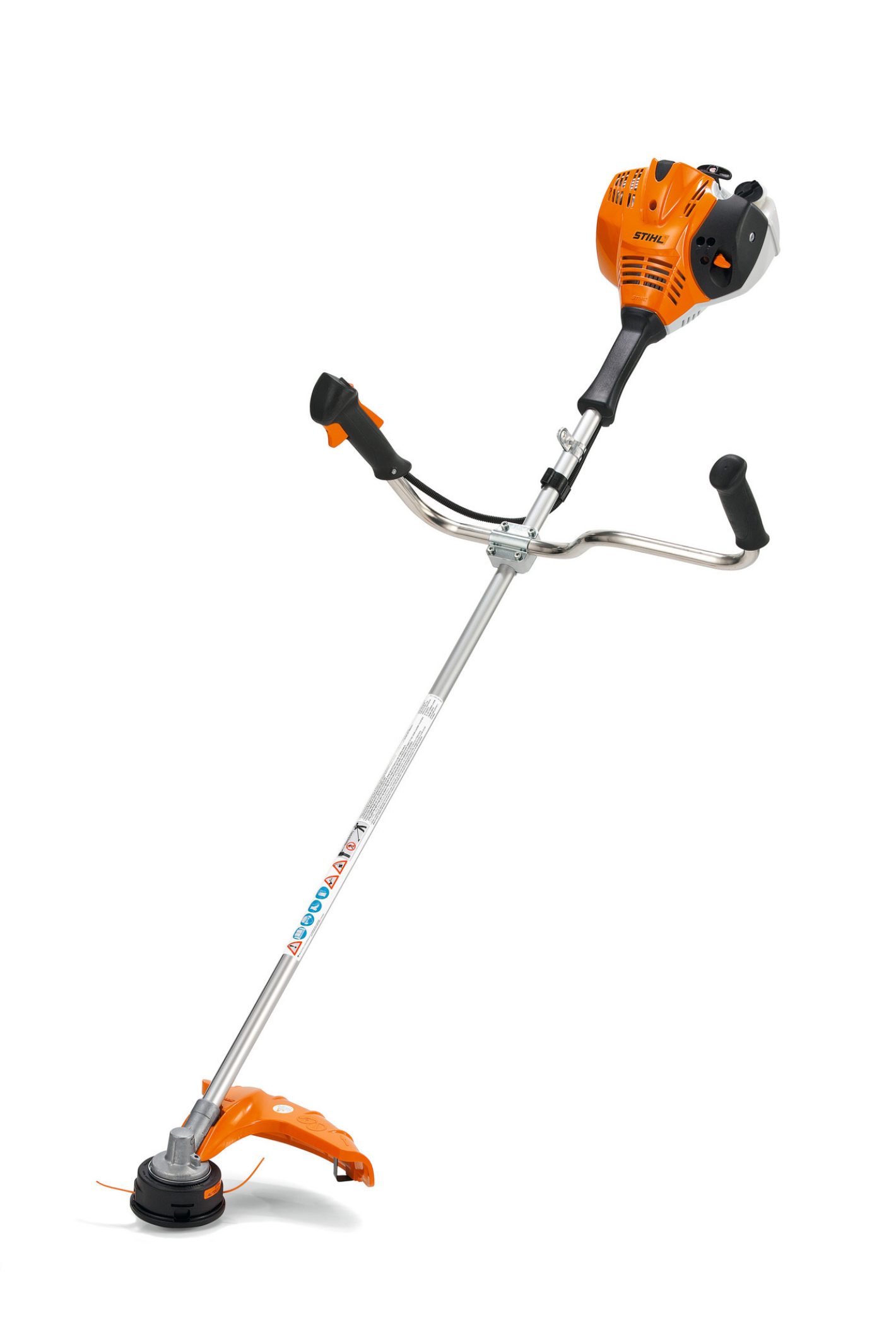
- Stihl FS 70 C-E — 27.2 cc, 0.9 kW, ErgoStart, bike handle; AutoCut line head, with a blade as an extra for bramble edges.
- Husqvarna 129R — 0.85 kW, 43 cm cut, 5.4 kg without cutting gear, with a grass blade and double harness.
- Honda UMK 425 LE — GX25 four-stroke on unmixed petrol, smooth and easy to feather; blade included.
- Makita EM2651UH — MM4 four-stroke, cow-horn handle, 5.6 kg and very low vibration for methodical passes.
- Makita DUR369LZ — twin-18V brushless, 430 mm cut, ADT and reverse switch; quiet near the house.
- Einhell GC-BC 25/1 — budget petrol with a 42 cm line spool, 3-tooth blade and harness.
How to cut a meadow
- Wait for seed set, typically late summer.
- Cut low in steady strips, with the head almost flat.
- Leave the hay for a few days so seed falls.
- Rake it all off — leaving cuttings adds nutrients that favour coarse grasses over wildflowers.
- Keep a blade for brambles creeping in from hedges.
Protect wildlife
Walk the meadow first and check for nesting birds, hedgehogs and amphibians. Cut from the centre outwards so animals can escape to cover. See the best brush cutters around ponds and for fields.
Our picks at a glance
| Model | Type | Engine / power | Weight | Rating |
|---|---|---|---|---|
| Stihl FS 70 C-E | Petrol | 27.2 cc · ErgoStart | 5.4 kg (without fuel and cutting tool) | 8.4 / 10 |
| Husqvarna 129R | Petrol | 27.6 cc · 2-stroke | 5.4 kg excl. cutting equipment | 8 / 10 |
| Honda UMK 425 LE | Petrol | 25 cc · GX25 4-stroke | 5.9 kg dry | 8.2 / 10 |
| Makita EM2651UH | Petrol | 25.4 cc · 4-stroke MM4 | 5.6 kg (Makita datasheet) | 8 / 10 |
| Makita DUR369LZ | Cordless | 36V LXT · Brushless | 5.7–6.3 kg (UK retailers) | 8.5 / 10 |
| Einhell GC-BC 25/1 I AS | Petrol | 25.4 cc · 2-stroke | 6.4 kg (listing) | 7.4 / 10 |
Weights are as stated by the maker, UK retailers or Amazon, so some include a battery or cutting gear and others don't — see each review for details.
Compare our picks head to head
Frequently asked questions
Line head or blade for a meadow?
Line for the main cut over grasses and flower stems; a blade (or grass blade) for bramble and woody regrowth around the edges.
When should I cut a wildflower meadow?
Typically once in late summer after flowers have set seed, leaving the hay to dry for a few days so seed drops, then raking it off. Some meadows get a light extra cut in autumn or early spring; follow the advice for your seed mix.
Do I need a powerful machine?
Not usually. Meadow growth is grass and flower stems, so a well-controlled 0.8–0.9 kW machine with a wide cut is more useful than raw power, unless brambles have taken hold.