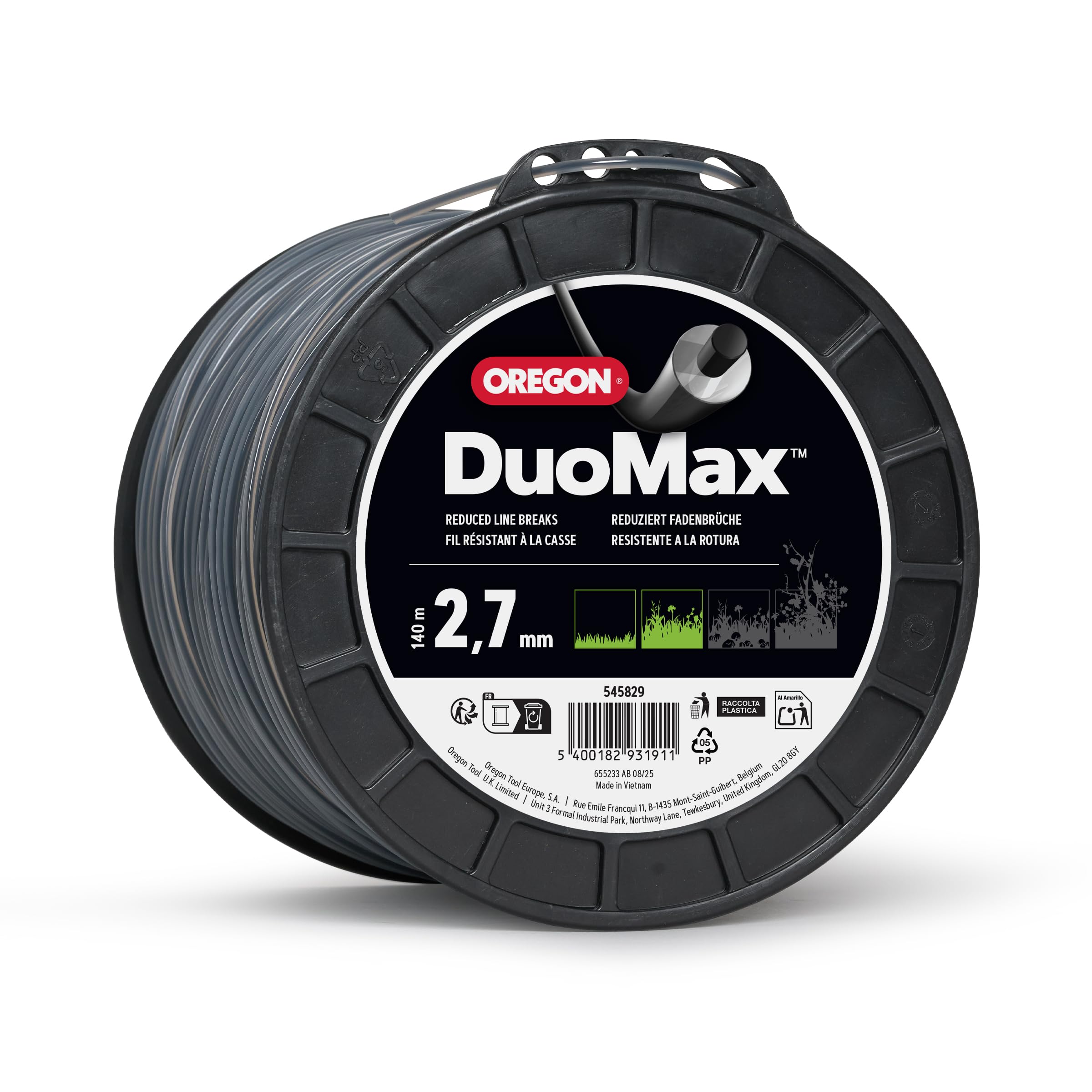
Oregon Duoline Plus 2.7mm
A dual-material 2.7mm trimmer line combining a soft outer edge with a stiffer core, aimed at mid-size trimmers cutting coarse grass and weeds.
You'll be sent to Amazon in your country. Indicative price — live, localised pricing where available. As an Amazon Associate we earn from qualifying purchases.
Pros
- Dual-material construction cuts cleanly while resisting snapping better than plain solid line
- Round profile feeds easily through most bump-feed and fixed-line heads
- 2.7mm gauge handles coarse grass, weeds and light scrub well
Cons
- Costs more than standard single-material line of the same diameter
- Too thick for small electric trimmers with narrow line channels
- Still line, not a blade, so it won't touch woody brush or saplings
What it is
Oregon’s Duoline Plus is a dual-material trimmer line: a co-extrusion process bonds a softer, sharper-cutting outer layer around a stiffer inner core, rather than the single uniform extrusion used in most budget line. The idea is to get two properties that normally trade off against each other — a soft edge cuts through grass stems more cleanly with less tearing and less strain on the motor, while the stiffer core keeps the line from flexing and snapping when it clips a fence post, stone or dry stalk. At 2.7mm it’s a mid-thick gauge, sitting above the 1.6-2.4mm line typically bundled with small electric strimmers and below the heaviest 3mm+ line reserved for the toughest brush-cutting work.
What to fit it to
This line suits bump-feed or fixed-line heads rated for line in roughly the 2.4-3.0mm range, which covers most mid-size petrol trimmers and higher-power cordless machines. Before buying, check the maximum line diameter printed on your trimmer head housing or listed in the manual, and confirm the eyelets are wide enough for 2.7mm to pass through freely — forcing thicker line through a head built for thinner gauge causes uneven feeding and premature eyelet wear. Small electric trimmers with narrow heads and eyelets sized for thinner line will struggle to run this comfortably and are better matched to a lighter gauge. Loading follows the usual routine for round line: wind onto the spool in the direction marked on the housing, leaving the tail length the head’s instructions call for.
Honest limitations
The dual-material construction genuinely improves cutting feel and durability over plain single-material line of the same thickness, but it doesn’t change the fundamental job trimmer line does. It’s well suited to grass, weeds and light scrubby growth, but brambles with any real woody stem, saplings or dense brush need a 3-tooth or similar blade attachment instead — pushing this line into that kind of material will still mean repeated snapping no matter how it’s constructed. It also costs more than standard solid line at the same 2.7mm diameter, so the extra spend makes most sense if you’re currently burning through spools from breakage or leaving a ragged cut, rather than for occasional light trimming where cheaper line does the job just as well.