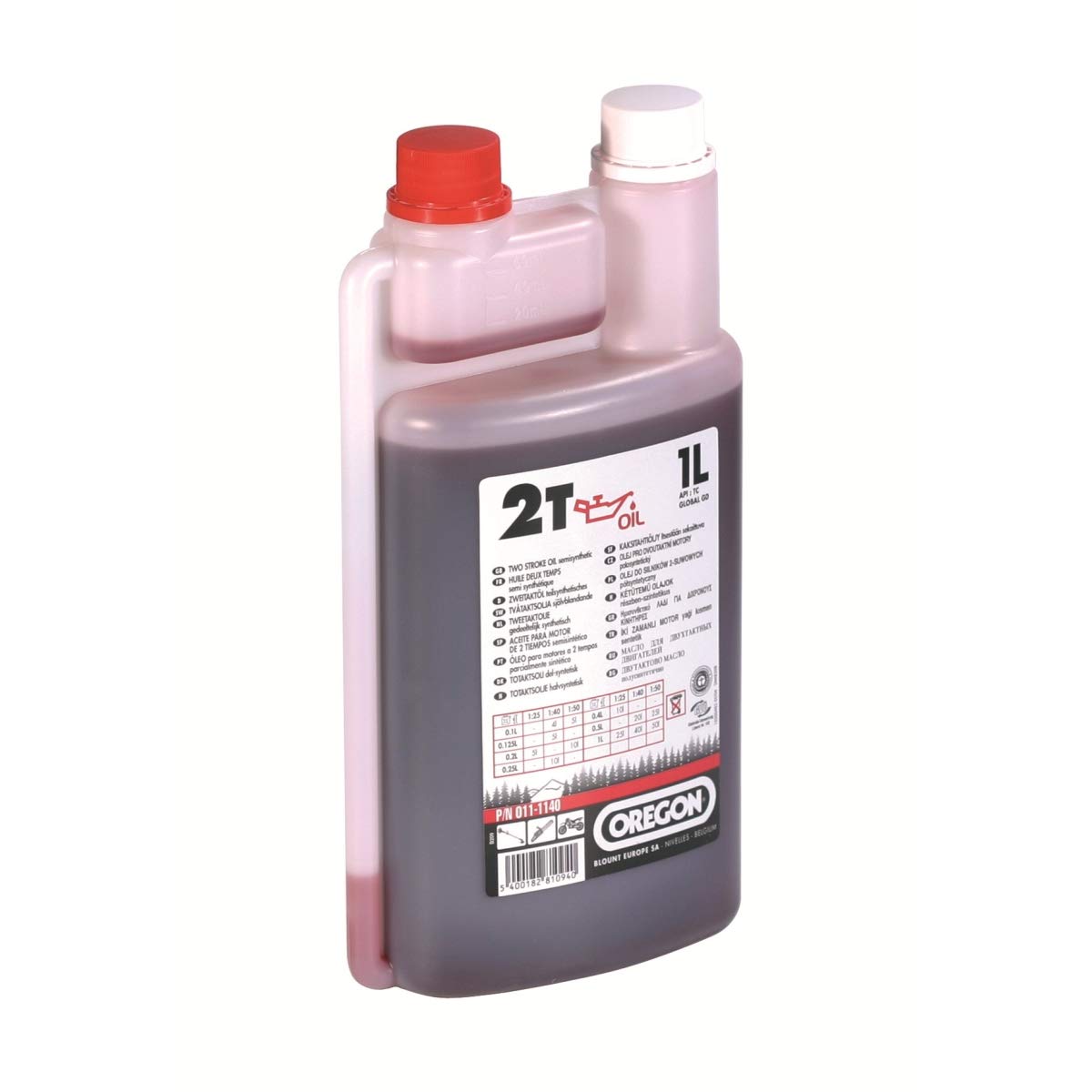
Oregon 2-Stroke Oil 1L
A semi-synthetic 2-stroke oil for pre-mixing with petrol, aimed at anyone running a 2-stroke brush cutter, chainsaw, or hedge trimmer.
You'll be sent to Amazon in your country. Indicative price — live, localised pricing where available. As an Amazon Associate we earn from qualifying purchases.
Pros
- Simple, widely stocked oil that works across most air-cooled 2-stroke garden tools
- Semi-synthetic formula burns cleaner than basic mineral oils, so fewer spark plug and exhaust port deposits
- 1 litre bottle is a practical size to keep in the shed without going off before you use it
Cons
- You still need to get the mix ratio right for your specific engine, it isn't a universal fix-all
- No built-in measuring jug, so you'll want a separate mixing bottle with ratio markings
What it does
This is engine oil, not a fuel additive: it’s designed to be mixed directly with unleaded petrol to create the fuel that runs a 2-stroke engine. Unlike a 4-stroke mower or car engine, a 2-stroke brush cutter has no separate oil sump, so the oil travels through the engine mixed in with the fuel itself, lubricating the crankshaft, bearings and piston as it burns. Skip this step, or get the ratio wrong, and you’re running a dry engine that will seize or wear out fast. Oregon’s version is a semi-synthetic blend, which tends to leave fewer gummy deposits on the spark plug and exhaust port than cheap mineral oils, and it’s formulated to burn reasonably cleanly at typical garden-tool running temperatures.
Choosing the right mix
The oil itself isn’t fussy about brand of machine, but the ratio you mix it at absolutely matters and depends on your specific engine, not on the oil. Older or simpler 2-stroke units (many brush cutters, older chainsaws) often call for 25:1 or 40:1, while some modern low-emission engines specify 50:1. This will be printed on the machine, in the manual, or sometimes on a sticker near the fuel cap; there’s no universal “right” answer, so always check rather than guess. Use fresh unleaded petrol (E10 is generally fine for most modern tools, but check your manual if you’re unsure), mix in a clean container with proper ratio markings, and shake it before fuelling. Because 2-stroke fuel starts to degrade within a few weeks, mix only what you’ll use over the next month or so.
Limitations
This oil won’t fix a machine that’s already gummed up from years of bad fuel, and it doesn’t replace routine maintenance like air filter cleaning or spark plug checks. It’s also not an ethanol stabiliser in itself, so if your tool sits unused for long stretches, you may still want to run the tank dry or add a separate fuel stabiliser before storage. Buy it as what it is: a decent, ordinary 2-stroke oil, not a performance upgrade.